What Is Financial Abuse?

Standard
  • Forbidding the victim to work
  • Sabotaging work or employment opportunities by stalking or harassing the victim at the workplace or causing the victim to lose her job by physically battering prior to important meetings or interviews
  • Controlling how all of the money is spent
  • Not allowing the victim access to bank accounts
  • Withholding money or giving “an allowance”
  • Not including the victim in investment or banking decisions
  • Forbidding the victim from attending job training or advancement opportunities
  • Forcing the victim to write bad checks or file fraudulent tax returns
  • Running up large amounts of debt on joint accounts, taking bad credit loans
  • Refusing to work or contribute to the family income
  • Withholding funds for the victim or children to obtain basic needs such as food and medicine
  • Hiding assets
  • Stealing the victim’s identity, property or inheritance
  • Forcing the victim to work in a family business without pay
  • Refusing to pay bills and ruining the victims’ credit score
  • Forcing the victim to turn over public benefits or threatening to turn the victim in for “cheating or misusing benefits”
  • Filing false insurance claims
  • Refusing to pay  or evading child support or manipulating the divorce process by drawing it out by hiding or not disclosing assets

Excerpted from nnedv.org

What Is Coercive Control?

Standard
“Coercive control is a term developed by Evan Stark to help us understand domestic abuse as more than a ‘fight’. It is a pattern of behaviour which seeks to take away the victim’s liberty or freedom, to strip away their sense of self. It is not just women’s bodily integrity which is violated but also their human rights.”
Read the book: Evan Stark, Coercive Control: How Men Entrap Women in Personal Life (2002)

What Is Gaslighting?

Standard

“Gaslighting is a colloquial term that describes a type of psychological abuse in which the abuser denies the victim’s reality, causing him/her to question him/herself, his/her memory, or his/her perceptions. The term gaslighting is also sometimes used to apply to the use of inflammatory behavior or language that provokes someone to behave in an uncharacteristic way. Gaslighting is often used an abusive tactic by those with narcissistic and psychopathic personalities. The aim of the abuse is to make the victim doubt his/her perception of reality, and gaslighting tactics can be entirely verbal or emotional.

Often, victims of this abuse may start out by challenging the perpetrator, who then turns the situation around by gaslighting them. In doing so, he or she causes the victim to question themselves and in doing so, draws attention away from the abuse. For example, someone might claim that his or her partner engaged in name-calling, yelling, or breaking of that person’s possessions. The partner might avoid taking the blame with gaslighting techniques such as denying that the events ever took place, or pointing out that other person’s transgressions were at fault.

An individual may gaslight another by:

  • Refusing to listen to any concerns or pretending not to understand them.
  • Questioning his or her memory, denying that events occurred in the way the victim (accurately) remembers.
  • Changing the subject to divert the victim’s attention from a topic, trivializing their concerns.
  • Pretending to forget things that have happened to further discredit the victim.
  • Denying events have taken place, claiming that the victim is making them up”

Excerpted from http://www.goodtherapy.org


What Is Stalking?

Standard

The kinds of acts that make up stalking include, but are not limited to, the following:

  • Following or surveillance
  • Inappropriate approaches and confrontations
  • Repeated, uninvited appearances at work or residence
  • Unwanted telephone calls or texts
  • Threatening the victim
  • Threatening the victim’s family and friends
  • Unwanted letters, e-mails, gifts
  • Repeatedly sending unwanted emails or texts to the victim
  • Using online social media inappropriately
  • Damaging the victim’s property
  • Physical assault
  • Sexual assault
  • Assaulting or killing the victim’s pet
  • Spreading false rumors
  • Filing false charges

Excerpted from Los Angeles College Consortium and usc.edu

What Is Emotional Abuse?

Standard

Any act including confinement, isolation, verbal assault, humiliation, intimidation, infantilization or any other treatment which may diminish the sense of identity, dignity or self-worth. Some examples are: yelling or swearing; name calling, insults or mocking; threats and intimidation; isolation; humiliation; denial of the abuse and blaming the victim.

Excerpted from http://www.healthyplace.com

Spring 2017

Standard

20170610_090715January to May of 2017 was fun; a “mixed bag” of new experiences, new students and lots of travel! I added workshops to my list of “Things That I Do”, working with everyone from Human Resource professionals to High School students. And I read; oh, boy, did I read! Stacks of books on domestic violence, sexual assault, human trafficking and gender equality. I read scholarly articles online and went over the NYS OPDV website with a fine-tooth comb. I also watched endless videos and TED talks.  It was near the end of last semester that I realized that if I didn’t educate myself beyond my own narrow experience, my usefulness to students and the general public alike would be extremely limited. There’s always more to learn!
IMG_20170321_212318_701

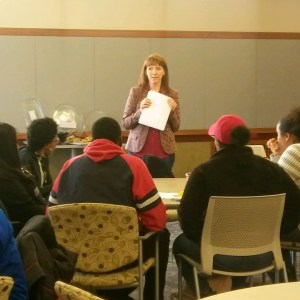
March 21 – “Because You’re a Girl: A Discussion on Gender Equality” workshop delivered to “The Big Eagle-Little Eagle Mentoring Program” at Niagara University. Niagara Falls High School students are paired with grad and undergrad students for academic support and general guidance.

20170321_172741_HDR1

They took the “Building a Budget” Activity (meant to show cost of living and pay disparity) VERY seriously. At one point the group that was trying to work out the woman’s budget complained, “But this doesn’t work, no matter how we do it; we always come up short at the end of the month…!” Ah, yes… we’re learning! 🙂

20170321_174352_HDR1

Discussing “Because You’re a Girl”, a blog post I wrote on sexual assault and how the sexual assault of women effects men. One student wrote on the eval: “The story at the end helped me to realize that things like this are real and can happen to anyone. It helped me to understand that sexual assault is never a joke.”

20170321_190054

Mr. Eric Rigg, Grad Student Extraordinaire and founder of “The Big Eagle-Little Eagle Mentoring Program” and HIS mentor, Ms. Averl Harbin

20170226_123631

When your mom is a DV advocate, your lessons about gender equality are more than just situational – Every fourteen year old boy could benefit from an hour or so with Jackson Katz. Watching Tough Guise, after which he looked at his dad and I and proclaimed, “I think some guys take this hyper-masculinity thing just a little too far!” Out of the mouths of babes :0

IMG_20170302_094318_688

Gratuitous shot of my “Office Assistant” watching a Michael Kimmel TED talk with me 🙂

IMG_20170330_213428_992

Had to stop by the African-American Student Union table at Niagara University’s “Take Back the Night” on March 30 – two of these lovely ladies attended my gender equality workshop and it was great to see them working so hard and standing up for women of color!

IMG_20170413_124752_855

Mentors aren’t just for kids – “Biz Women Mentoring Mondays”  sponsored by Buffalo Business First at RiverWorks. It turned out to be a study in how uncomfortable the average person is when confronted in even the smallest way with the topic of domestic violence.

IMG_20170324_154625_839

And another new workshop! “Beyond Leaving Dorian, A Culture of Caring: Addressing Domestic Violence in the Workplace”.


IMG_20170430_231648_767

Twitter is a fantastic exercise in “keeping it succinct”. LOVE it!

IMG_20170512_132632_547

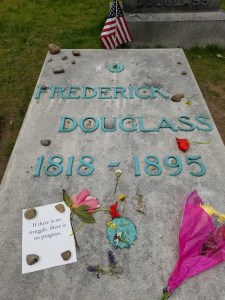
I was so inspired after the mountains of reading I did in order to prepare for the gender equality workshop, my husband and I decided that a day trip to the very SEAT of the movement would be in order!

20170512_131135

He is one of my personal heroes – ugly cried the entire time I stood there.

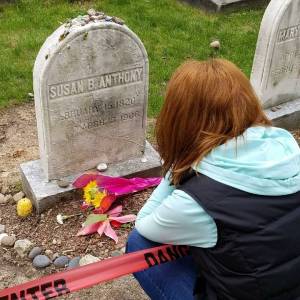
IMG_20170513_102544_415

None of what I do is easy. Much of the time it feels like I’m shouting into a black hole. Every single day, women are still dying at the hands of men who claim to love them. “Tell me, Susan, how did you do it? You spent your life fighting and didn’t even live to see the goal met.” And the wind carried what sounded like an answer – “Persist.”

20170530_122704

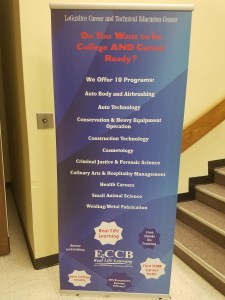
May 30 – DV Awareness presentation at Fredonia BOCES

20170530_123021

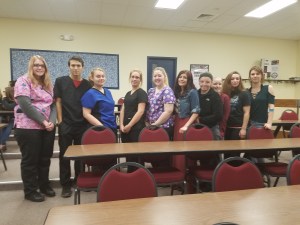
Cosmetology and Health Careers Students. Don’t ever assume that you don’t need to talk to your kids about healthy relationships or boundaries. One student remarked on her eval: “The most important thing that I learned was that it’s not o.k. to be grabbed or hit.” Another remarked, “The presentation gave me hope that some day I will get out of the relationship I’m in.” Education is the key.

20170609_181507

Law Enforcement students. These kids arrived dressed in full uniform, filed-in in what was akin to military formation and took the entire presentation very seriously. And yet their reflection letters to me said things like, “I was touched by your presentation. You opened my eyes. We are grateful for your strength.” Again…ugly cry.

20170610_082044

Jennie Alessi – NYS Certified Police Officer, Professor of Criminal Justice at Hilbert College and Criminal Justice Instructor at Fredonia BOCES. She is tiny but she is badass. Extremely honored that she extended me the invitation to come and speak.

20170606_203123

Now, let’s take a moment, shall we, to note this extremely bad picture of me… What the… ? I often post the less than flattering shots because, well… sometimes that’s all I get and I have to have a picture to post. But this one … wow … I look chunky AND grumpy … and I’m neither! Well, ok, to be fair … I’m probably grumpy … a lot … but geez! There’s still plenty of time left, but I’m hoping that this goes down as my “Least Flattering Pic of 2017” 😉


What Is Domestic Violence?

Standard

Intimate Terrorism is violence deployed in the service of (gaining) general control over one’s partner.

Violent Resistance is when a victim of Intimate Terrorism fights back physically.

Situational Couple Violence is when one or both partners are violent but neither is using violence in an attempt to exert general control over the other. Unlike Intimate Terrorism, violence is not usually a central part of the couple’s relationship.


(Excerpted from: A Typology of Domestic Violence, Michael P. Johnson; globalrightsforwomen.org)


What is Physical Abuse?

Standard

Punching, slapping, hitting, kicking, grabbing/pushing, biting, poking, hair pulling, pinching, shaking, cutting, burning, restraint, strangulation or any physical injury caused by an object or weapon.

No one has the right to harm another person. If you’re being abused by an intimate partner, there is help available. http://www.ncadv.org   http://www.safehorizon.org   http://www.ndvh.org

The Strongest Person You Know

Standard

Screenshot_2016-01-07-08-19-29

Dear Victim of Domestic Violence,

You are the strongest person you know. In fact, you might be the strongest person you’ll ever know.

If you have lived through even one day when you were physically injured or emotionally battered by someone that claimed to love you, you are the strongest person you know. If you took the hit, physically or emotionally, and didn’t completely shut down on the spot from the hurt, shame, shock, grief, anger, humiliation, horror, disgust, and confusion that you felt, you are the strongest person you know. If you got up the next day and tried life again – took care of your kids, went to work, cooked and cleaned and saw friends, family and co-workers and went about daily life like your very soul hadn’t been dinged – you are the strongest person you know.

What’s ironic is that because of all of this, you probably think that you’re the weakest person you know. You think that it’s your fault or maybe some sort or failure on your part. You look at your kids and you worry because there’s a chance that they might have witnessed or heard the abuse that was wrought upon you. You don’t want friends or family to find out because maybe they would judge you. Worst of all is that you ‘blinked’; when your partner hurt you, you didn’t immediately rise up and end the relationship, like every *kick ’em to the curb* girl-anthem/pop song says that an independent, strong woman does. Maybe you fought back and maybe you didn’t but ultimately, you stayed. And you let him stay. You let things cool down. You told yourself that it would never happen again. You bet on the hope that deep down, he’s a better man than his actions say that he is.

That’s not a bet I’d be willing to take.

Domestic violence escalates quickly and can be fatal. You feel weak because your soul has been dinged, but believe me when I tell you that you’re the strongest person you know because if you managed to live through even one instance of battery and still got up the next day, put feet on the floor and tried life again, you possess a strength that can never be compromised. Not by your partner. Not by anyone.

If you leave, are things going to be weird for a while? Are you going to have to live somewhere unfamiliar? Will you have to change jobs, email addresses and your cell phone number? Will you have to stay away from social media? Will you have to trade in your car for a different model to ensure yourself a good amount of privacy and anonymity? Will your children be confused and scared and require extra patience while you work through keeping yourself safe? Will loved ones, lawyers, co-workers and others ask you prying, silly or uninformed questions like, Why did you stay for so long?, Why didn’t you call the police? or Why did you have another baby with him? All or some of these things might happen, but you will handle it all and you will handle it well, because you are the strongest person you know.

How can I be so sure? Because I know this: If you were strong enough to have lived through even one instance of physical and/or emotional battery with your partner, you’re damn sure strong enough to live without him.

Love,

A Survivor

“Not totally believable.”

Standard

20170105_081155When I sat down at the computer this morning and noticed that a two star review had come through on Amazon for Leaving Dorian, I immediately assumed that a first edition copy had once again slipped through the cracks. I have disclaimers on all of my media letting readers know that if they’re given the option of purchasing a first or second edition copy, second edition is always going to be a better read. I was the newbie of all newbies when I published Leaving Dorian back in 2014 and didn’t realize the importance of hiring a professional editor. Since there’s no way to put that genie back in the bottle, I simply cross my fingers and hope that potential readers take the disclaimer to heart and purchase a second edition. But when I scrolled down to read the review, I was surprised to find that there was no mention of poor editing.

“The book is ok. A little frustrating in its organization and lacking some of the spark of other similar stories. Not totally believable.”

Now I know that the ‘organization’ the reader is referring to is my back and forth style of writing. I go from the day that I left my ex-husband in one chapter to describing my childhood and then back again. I understand how this can be confusing to some people, especially if they don’t get through the book in a couple of sittings. So, no harm no foul. The fact that the reader thought that it lacked ‘spark’, well, that’s his/her opinion and they’re entitled to that. But what made me literally laugh out loud was the last sentence: “Not totally believable.”

Whaaaaat?

Not believable?

I sat there at the keyboard, chuckling to myself. Not sure how to remedy that; it’s my actual, real and true life, so…..yeah. The reality is that I went easy on the graphic details of my childhood and my first marriage on purpose, because I vividly recall having to read an extremely graphic memoir about child abuse when I was in college. It was so horrible, so graphic, that it made my skin crawl; reading it made me cry and feel physically ill. Though it was a relatively short read, more than once I had to put it down because I felt as though the details were just too awful to know. Though I wasn’t sure just exactly what I was going to share when I sat down to write Leaving Dorian, I knew for sure that if nothing else, it had to be readable. If it wasn’t something that people could sit with then it couldn’t do its job, which was to help victims and survivors of abuse.

Again, though, readers are entitled to their opinion and if this reader didn’t believe everything that I’d written, well then, so be it; I can’t fix that. I clicked off Amazon and went on with my morning, but I couldn’t help coming back to that last line, “Not totally believable.” Why did it bother me so much?

I guess what’s bothering me has little to do with that singular review. What’s bothering me is that I know very well that victims and survivors of abuse are met every single day with that very same skepticism. Are their friends, loved ones, co-workers and neighbors coming right out and saying, “I don’t believe you”? No. But responding to a women’s candid, heart-wrenching admission that they’ve experienced something tragic with questions like, “Why didn’t you say something sooner?”, “Why didn’t you call the police?” or “Are you sure it’s abuse? I mean, couples fight; don’t make more out of this than it needs to be” is exactly the same sentiment. It’s “I don’t believe you” wrapped up in feigned moderation, excessive caution and good judgement. (…We don’t want to accuse someone unfairly, now; let’s make entirely sure we have all the facts before we start ruining reputations and upending lives…) Isn’t it interesting, though, how often it’s the abuser that’s given the benefit of the doubt instead of the victim?

Students and DV service providers have asked me on more than one occasion what I think the most important thing is that you can say to a victim or survivor of abuse. That if I only had one sentence, what would I choose? My answer is, and will always be, “I believe you”.

To continue to diminish victims and survivors with the old, worn out stories of supposed liars, “Oh, I know so-and-so whose wife lied about him hitting her and he got thrown in jail and it was total BS…” or “There was this girl when I was in college that lied about being raped and the guy she accused got kicked out of school and his life was ruined forever…” is unfair at best and harmful at worst. People lie, it’s true. And people will lie about all sorts of things, for reasons that aren’t always entirely clear. But the chances that a woman is lying when she finally steps forward to tell her story and reach out for help is incredibly slim. More often than not, victims and survivors are actually holding back; keeping the really hurtful, humiliating details to themselves. Telling just enough to get the help and services that they need in order to re-start their lives and keep their families afloat.

Maybe that reader didn’t believe my story, and that’s fine with me. But to every victim and survivor out there who reads this blog post, no worries. There are multitudes of people out there who will believe you. Reach out for help. Tell. Get to safety. Re-start your lives; you deserve nothing less.

And just for the record, “I believe you”.