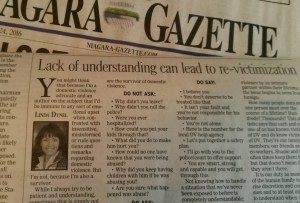
“Think About It” Thursdays

Standard

20161113_070014“During the 19th century, some legal actions were taken to address the most extreme forms of battering. However, since battering was socially and legally acceptable, most of these new laws were simply intended to regulate the level of violence used and the severity of injury allowed. Examples of such laws ranged from the common law rule of thumb to more modern certain rule and stitch rule. The certain rule of the mid-1800s indicated that no outside interference would occur in wife battering unless the husband created a permanent injury to the wife. The stitch rule of the early 1900s cautioned men not to cause injuries requiring stitches because police could be called to intercede in such situations….laws concerning battering developed from a foundation of acceptability and regulation rather than one of social disapproval and criminalization.”

*Excerpted from Self-Defense and Battered Women Who Kill: A New Framework , Ogle/Jacobs, (2002)

“A Tribute To Women” The YWCA of the Niagara Frontier 2016 Niagara Awards

Standard
ywcazonta

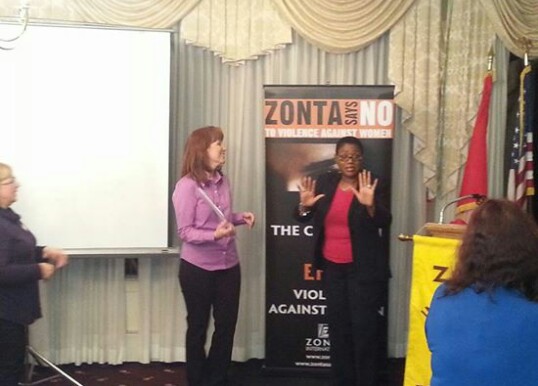
The fantastic women who nominated me – Representing The Zonta Club of Niagara Falls, NY – Janice Lewis, Kyle Patterson and Bonnie Crogan-Mazur. I was surprised and extremely honored to win the “Entrepreneur” category.

Upon acceptance of the beautiful award I said: “Leaving Dorian had been out for about a year when I received an email from Bonnie Crogan-Mazur asking if I would like to come and speak to the ladies of The Zonta Club of Niagara Falls at one of their meetings. Now what I wanted to say was, ‘No! No I DO NOT want to come and stand in front of a group of strangers and talk about my book and my  own experience with domestic violence. I’m extremely shy by nature which is why I’m a writer; I sit in front of a computer all day by myself. That is my comfort level…!’ But instead I said ‘yes‘ and I’m so glad that I did. The ladies of The Zonta Club of Niagara Falls completely changed the trajectory of my career. I simply wouldn’t be where I am today with out them and I will be forever grateful.”

** cue ugly cry……. :/

Academic Reviews of “Leaving Dorian”

Standard

“I (enjoyed) your eloquent book (Leaving Dorian). The writing was great and I loved the way you juxtaposed the leaving chapters, reminding everyone it is a process, not a single event, with the rest of the relationship. The details were all too familiar from dozens of other similar cases, many with not such happy endings. I think we need to put a much greater emphasis on the ‘safety work’ women do after they get out.” – Evan Stark, Ph.D, MSW, Professor Emeritus, Rutgers University and author of “Coercive Control: How Men Entrap Women in Personal Life”

“Linda Dynel’s Leaving Dorian is an impactful read, and one I assign regularly in my graduate Domestic Violence courses. Leaving Dorian provides my students with insights on the adversities and challenges that survivors may experience, both during and after their violent relationship. Further, Dynel’s book highlights foreshadowing life experiences prior to her relationship with Dorian, which help students understand risk factors and red flags associated with unhealthy relationships, as well as the evolution and cyclical nature of domestic violence. Assigned as the first book of the semester, my students consistently discuss and relate Dynel’s book to other class readings and material throughout the remaining semester, and frequently share that it is their favorite read of the class. It is readily apparent that Leaving Dorian resonates with them long after they finish reading the book, as it provides students with a glimpse into one survivor’s harrowing journey to escape relationship violence. In short — Dynel’s Leaving Dorian is a must read!” – Dana L. Radatz, Ph.D., Assistant Professor, Criminology & Criminal Justice, Niagara University

“Linda Dynel’s gripping account of the ongoing abuse she endured while living with her now ex-husband Dorian serves as a wake-up call to all human service professionals. Not only must we conduct assessments of our clients we fear may be at-risk for domestic violence but reach out into the communities where we work.  As Ms. Dynel reveals in her book, domestic violence is insidious: victims of abuse are often not in a position to reach out for help on their own behalf. Instead, it is incumbent on professionals to become more attuned to the dynamics of domestic violence; educate other health and human service professionals to do the same; and advocate on behalf of victims for services that are adequate, appropriate, and accessible.” – Robert H. Keefe, PhD, ACSW, Associate Professor, University at Buffalo School of Social Work  

“I chose Leaving Dorian for my Domestic Violence course based on the recommendation of a respected Victimologist. I am SO glad I did. The book served as the ‘focal point’ of our entire semester, and we were able to apply all of the principles we’d discussed in class about intimate partner violence to Linda’s real experience. For my students, some of the aspects of the book that stood out were religious abuse, psychological abuse, the effect of abuse on children, and how truly hard it is for a person to leave an abusive situation. We spent an entire week of class time just discussing this book in detail. I have had several students tell me this was the most worthwhile read of our entire semester together; it is an easy and powerful read that moves at a fast pace. I am so grateful Linda wrote about her harrowing ordeal in such detail. I truly believe this book has changed my students’ lives.” – Dr. Danielle Slakoff, Assistant Professor of Criminology and Justice, Loyola University New Orleans

“The DV community owes you a huge thank you for putting yourself out there so honestly and bravely. It’s quite common and easy for people who haven’t been in a violent relationship to pass judgement, especially when kids are involved. You so effectively dispelled many of the common stereotypes, which is just so critical in higher ed. I can lecture until I’m blue in the face but it doesn’t have near the impact of a first hand account. The other piece that will be so effective is the support you will provide other survivors. It is very easy (for victims) to feel alone and to think you’re the only person this happened to. As an academic-activist, I can also say that it was very helpful to come across your book as there does not seem to have been much published from a personal account in recent years.” – Dr. Angie Moe, Professor of Sociology, Western Michigan University

“I decided to use Leaving Dorian because it humanizes topics we cover in my class.  I always cover topics pertaining to men’s violence against women, and I like to use items that help students better understand these topics in ways that go beyond the sensationalized (and depersonalized) ways in which they typically hear about them.” – Dr. James Sutton, Hobart and William Smith Colleges 

“I REALLY liked the book – found it very engaging and hard to put down, though it was also painful to read. It’s the kind of story that a LOT of women can relate to. It is a very fine contribution to the growing body of literature on this horrendous problem of intimate partner abuse.” – Dr. Maureen Hannah, NYS Licensed Psychologist and Professor of Psychology, Siena College

Willful Blindness

Standard

20160607_062759

Why do people tend to turn a blind eye to domestic violence?

“…even in the face of facts that people understood to be evidence of abuse, no one helped. Why? Because (Sheila) did not ask for help? Probably not. Because these (family members, friends, co-workers, neighbors) are uncaring people? No. Help did not come because domestic violence is an awful thing to know about. And when we know about it, we do not know what to do. Domestic violence invites what we might understand best as willful blindness, an unwillingness to discover the facts that will force us to confront the reality that we want to avoid.”*

*Excerpted from Self-Defense and the Battered Woman, Ogle and Jacobs, 2002, in the matter of People v. Beasley

Patriarchal Terrorism

Standard

patterrI like words. Well, yeah… I write, so…you’d think. But not just any words; I like the right words. I like words (and phrases) that make you perk up and take notice. More specifically, I like descriptors that are so narrow, so specific, that when you read them you think, “Yes! That’s it! That’s exactly the right way to phrase that!”

I first saw the words “Patriarchal Terrorism” a couple of weeks ago; I was reading a paper written in the mid-nineties by Michael P. Johnson. Immediately upon seeing those two words pushed together on the page, I literally got up, went my computer and started Googling the phrase to see what other articles and information might be associated with it.

Terrorism. It’s a word that’s all too common in our post 9/11 world, but in 1995, “Terrorism” wasn’t a word that was thrown around lightly. It wasn’t a part of our daily vernacular. And yet here was this paper written twenty years ago, using it in regard to domestic violence. The paper was published a month before my older daughter was born, just a few short months before my ex-husband put his hands on me for the first time, nearly killing me.

“Patriarchal terrorism, a product of patriarchal traditions of men’s right to control ‘their’ women, is a form of terroristic control of wives by their husbands that involves the systematic use of not only violence, but economic subordination, threats, isolation and other control tactics….The terminology ‘battered wife’ is objectionable on the grounds that it shifts the focus to the victim, seeming to imply that the pattern in question adheres to the woman rather than to the man who is in fact behaviorally and morally responsible (sic) The term ‘patriarchal terrorism’ has the advantage of keeping the focus on the perpetrator and of keeping our attention on the systematic, intentional nature of this form of violence.”*

Patriarchal Terrorism. Yes, those are just the right words to describe what I lived through. That is domestic violence.

*Excerpted from “Patriarchal Terrorism and Common Couple Violence: Two Forms of Violence Against Women” by Michael P. Johnson, Journal of Marriage and Family, Vol. 57, No.2, (May 1995),283-294

Rule Of Thumb

Standard

20160421_083439Did you know that the phrase “rule of thumb”is actually derived from British Common Law codified by Sir William Blackstone in 1768?

“While Blackstone never attempted to criminalize battering, he did create the first effort to regulate the severity of allowable battering. He codified the ‘rule of thumb’ stating that a husband had the legal right and responsibility to control and punish his wife. However, that punishment was to be done with a stick no bigger than the husband’s thumb.”*

We give a lot of lip service to putting an end to domestic violence, but how far have we really come in the last 250 years in what we believe is acceptable behind closed doors? To that end, how often do we reference our partner/spouse in terms of property or ownership by using possessive words like “mine”? Objectification is like a gateway drug; it feeds selfishness and ego and impedes us from seeing someone as wholly their own person, to be valued and respected aside and apart from our own needs, wants and desires.

*Excerpted from Self-Defense and Battered Women Who Kill: A New Framework , Ogle/Jacobs, 2002

2016 Woman of Distinction Award

Standard
Bonniereadingaward.png

Program Chair Bonnie Crogan-Mazur read from the award: “The Zonta Club of Niagara Falls, NY, member of Zonta International, Empowering Women Through Advocacy, Woman of Distinction Award in recognition of the 105th International Women’s Day is presented to Linda Dynel on March 9, 2016.”

medonnaowens

Niagara Falls Administrator Donna Owens after presenting me with the Proclamation from Niagara Falls Mayor Paul Dyster. After chatting over dinner and listening to her presentation, I can tell you that the people of the City of Niagara Falls are blessed to have her working on their behalf.


2016 Woman of Distinction Acceptance Speech

Standard

award“In January I did a presentation for DV service providers in Niagara Falls. Family & Children’s Services of Niagara sponsored the event and several other agencies were invited to attend. We ended up having a pretty good sized group; maybe thirty in all, and agencies like Legal Aide, advocates from the Niagara County Sheriff’s office, a professor from Niagara University and interns from NU attended, as well.

It was the first time I’d ever spoken without a podium and the group was very close to where I was standing, so even with my contacts out I could see the front few rows very clearly. (My little cheat to calm my nerves; I can’t read facial expressions without my contacts/glasses. I don’t get distracted or emotional if I can’t read the emotion on my attendees faces!)

The hour long presentation went well; lots of good questions and comments and even some laughter and tears. Everyone seemed to enjoy themselves and get a lot out of the presentation except for one woman. She was sitting in the front row, directly to my right. I don’t want to say that she had no expression on her face; the best way to describe it was stone. She sat there the entire time looking like stone. There was clearly something wrong, but of course I didn’t have any idea what was going on. I thought that maybe she didn’t like the presentation; maybe she didn’t want to be there? I had no idea. But once I was through speaking and went to a side table to sign books, she was up and out of her seat and heading for the door.

When I got home later that night my husband asked how it went and I said great, except for that one woman. I just couldn’t figure it out; it bothered me that she looked so bothered. My husband assured me that it probably wasn’t the presentation; maybe she didn’t feel well or maybe something was going on at home or work. I agreed that he was probably right, but still… if you could have seen her face, I lamented.

“Well, maybe she didn’t like the presentation,” he reluctantly suggested. “You’re never gonna reach everyone.”

I agreed to focus on the positive and went to bed feeling satisfied that I’d given it my best effort. When I got up the next morning just before six, I noticed the Messenger light was already blinking on my phone. Assuming that it was one of my grown children that live out of town, I braced myself, prepared to handle whatever news was so urgent that it couldn’t wait until I’d had my coffee. But it wasn’t one of my kids; it was the woman from the night before.

She wondered if I remembered her (of course I did, I wanted to say; you made me nervous the entire time I was speaking, trying to figure out what was wrong!) and apologized for not coming over and saying hello after the presentation. She said that she was afraid that if she said anything, she would break down in tears in front of her co-workers. She went on to explain that her mother had been brutally murdered four years earlier by a long-time boyfriend.

We spoke at length; she said that she’d read Leaving Dorian and had recommended it to friends and family members alike, even posting about it on her Facebook page. She also had nothing but kind words about the presentation. Before we said goodbye she told me, “Don’t stop doing what you’re doing; WE need you.”

You know, even after all of the really wonderful things that she’d said about me and the book and the presentation, all I could think was – she wouldn’t have had any of that without you. She read one of the copies of the book that your Club donated to Family & Children’s Services! And there wouldn’t have been a presentation if I hadn’t met Karrie (Gebhardt, Director of Passage House) right here at the Hat Luncheon (fundraiser in October, 2015). This woman felt supported and understood and was able to take all of that positivity back to her friends and family members who also suffered after her mother’s death, because of your efforts.

I’m sure there are times that you wonder if what your Club is doing is actually making a difference. The world is a vast and complicated place, and the problems and heartaches of women all over the world can seem far too complex to ever make a dent in. Your efforts may seem small, but they’re like a tiny pebble dropped into a pond. The ripples that come off of that one tiny pebble reach every corner of that pond, no matter how large the pond is. Your fight for social justice, gender equality and the safety and education of women all over the world is unique. It’s a battle too few choose to fight. The world is a better place because of The Zonta Club of Niagara Falls, New York.

It is with the utmost gratitude that I humbly accept this award. Thank you.”
Gerard Place, February 2, 2016

Standard

Presented “Beyond Leaving Dorian: A Discussion on Domestic Violence” to the women of Gerard Place, a transitional housing shelter for battered/recovering women and their children.

gp3

Domestic violence isn’t a feeling, it’s a fact; talking statistics and mortality rates from domesticabuseshelter dot org

gp1

Many women attended, though only a few agreed to be photographed. The stigma and shame attached to being a victim of DV is part of what keeps women from stepping forward and asking for help. I was happy to allow each woman her privacy, depending on her individual comfort level. Each and every woman in that room has my utmost respect and I was grateful to each for choosing to attend.

gp7

Plenty of good questions, some of which I’d never been asked before. These ladies came prepared!

gp9

The woman of Gerard Place are provided day care services so that they can attend presentations like mine as well as educational/employment/vocational training, life skills classes and counseling.

gpkaitlinprice

Kaitlin Price, Case Manager & Life Skills Coordinator, who put our afternoon together. Bright, organized and always ready with a smile, Kaitlin’s positive attitude is infectious.

gplogo

Gerard Place first opened its doors in 2000, the culmination of the work of 12 congregations of Women Religious in the Diocese of Buffalo who created and sponsored the agency on the grounds of the former St. Gerard Parish. Located in the heart of one of Buffalo’s poorest communities (the Bailey-Delevan neighborhood, where the unemployment rate is a staggering 55% among those aged 19-39 and 40% of children live below the poverty line) Gerard Place has assisted hundreds of families by giving them the tools that they need to help themselves and break the poverty cycle.

In 2009, the Junior League of Buffalo/Buffalo News Education Building was opened, providing GED and computer classes, job readiness training, like skills support and health and nutrition education to both families in residence at Gerard Place as well as the community at large.  In any given year, nearly 40 different collaborative partners utilize the facility and share their expertise with those in need. Four years later, in 2013, agency leadership announced a campaign to renovate the former St. Gerard Parish Hall building and turn it into a multi-purpose community center.  The result of this ambitious project will be a vocational training program (coordinated by partner Allied Health), a gymnasium, an expanded computer lab and day care center, an additional wing of classrooms and an industrial kitchen.

Residents are not given a “hand out,” they are earning a “hand up.”

Please visit   http://www.gerardplace.org   for information on the many fundraising opportunities that you can take part in to support Gerard Place.

**Information on Gerard Place was excerpted from their website.


Family & Children’s Services of Niagara, January 21, 2016

Standard

Presented “Beyond Leaving Dorian: A Discussion on Domestic Violence” to staff and advocates from Family & Children’s Services of Niagara, Legal Aid, Niagara County Sheriff Department, YWCA of Lockport, Dr. Dana Radatz from Niagara University and NU interns.

FACS5

Seeing the group from this perspective really doesn’t do them justice. They look incredibly average; they could be your next-door neighbor or your co-worker. And they have vague, vanilla sounding job titles like “Child Advocate” and “Coordinator”. What you can’t see are their capes; the “S” on their chests are invisible. These dedicated women and men are truly some of the super-heroes of our community.

FACSSTAFF3

Larissa, Advocacy Coordinator (in black) kept everything running smoothly.

FACSSTAFF4

Nellie (in teal) with the YWCA of Lockport.

FACS1

Talking about how quickly Leaving Dorian had to be taken from ebook to paperback – two months from the initial publication date!

Excerpted from the Family & Children’s Services website:

“2015 marked the 120th anniversary of Family & Children’s Service of Niagara. Founded in 1895, Family & Children’s Service of Niagara has met the ever-changing needs of our community for more than a century by providing the residents of the Niagara region with a wide range of community and social work services. Over the years our name has changed and our services have been modified to meet the needs of the community in the 21st century, but our work of helping people help themselves has remained. Thousands of children, adults and families have turned to the agency for compassionate, affordable and professional help to meet their needs. Family & Children’s Service is truly a family service agency providing a mosaic of inter-related services for the benefit of the entire family from infants to adults.”

These services include, but are not limited to:

  • Domestic Violence Services, including Passage House Emergency Shelter
  • Parent Empowerment Program
  • Healthy Families Program
  • Youth Services, including Casey House (runaway & homeless youth shelter) and The CRIB Maternity Group Home (for pregnant and parenting teens)
  • Mental Health Counseling for adults and children

24/7 DV Hotline: 716-299-0909      *****      24/7 Runaway Youth Hotline: 716-285-7125


Project Runway December, 2015

projectrunway

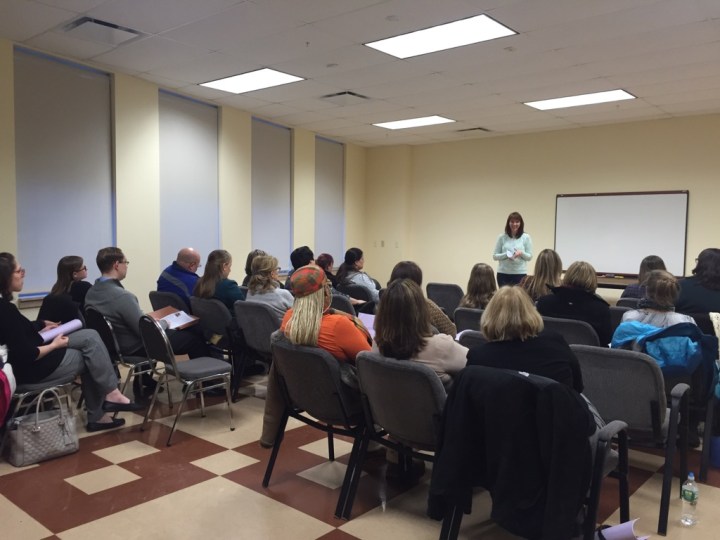
Staff of Project Runway (…a drug and alcohol-free pathway for young women) and related departments at Niagara Falls Memorial Hospital gathered to be a part of the seminar, “Beyond Leaving Dorian: A Discussion on Domestic Violence”. A big thank you to Sarah Obot, Community Outreach Coordinator with Project Runway for inviting me and for organizing this gathering of such intelligent, kind, highly motivated women!