“Not totally believable.”

Standard

20170105_081155When I sat down at the computer this morning and noticed that a two star review had come through on Amazon for Leaving Dorian, I immediately assumed that a first edition copy had once again slipped through the cracks. I have disclaimers on all of my media letting readers know that if they’re given the option of purchasing a first or second edition copy, second edition is always going to be a better read. I was the newbie of all newbies when I published Leaving Dorian back in 2014 and didn’t realize the importance of hiring a professional editor. Since there’s no way to put that genie back in the bottle, I simply cross my fingers and hope that potential readers take the disclaimer to heart and purchase a second edition. But when I scrolled down to read the review, I was surprised to find that there was no mention of poor editing.

“The book is ok. A little frustrating in its organization and lacking some of the spark of other similar stories. Not totally believable.”

Now I know that the ‘organization’ the reader is referring to is my back and forth style of writing. I go from the day that I left my ex-husband in one chapter to describing my childhood and then back again. I understand how this can be confusing to some people, especially if they don’t get through the book in a couple of sittings. So, no harm no foul. The fact that the reader thought that it lacked ‘spark’, well, that’s his/her opinion and they’re entitled to that. But what made me literally laugh out loud was the last sentence: “Not totally believable.”

Whaaaaat?

Not believable?

I sat there at the keyboard, chuckling to myself. Not sure how to remedy that; it’s my actual, real and true life, so…..yeah. The reality is that I went easy on the graphic details of my childhood and my first marriage on purpose, because I vividly recall having to read an extremely graphic memoir about child abuse when I was in college. It was so horrible, so graphic, that it made my skin crawl; reading it made me cry and feel physically ill. Though it was a relatively short read, more than once I had to put it down because I felt as though the details were just too awful to know. Though I wasn’t sure just exactly what I was going to share when I sat down to write Leaving Dorian, I knew for sure that if nothing else, it had to be readable. If it wasn’t something that people could sit with then it couldn’t do its job, which was to help victims and survivors of abuse.

Again, though, readers are entitled to their opinion and if this reader didn’t believe everything that I’d written, well then, so be it; I can’t fix that. I clicked off Amazon and went on with my morning, but I couldn’t help coming back to that last line, “Not totally believable.” Why did it bother me so much?

I guess what’s bothering me has little to do with that singular review. What’s bothering me is that I know very well that victims and survivors of abuse are met every single day with that very same skepticism. Are their friends, loved ones, co-workers and neighbors coming right out and saying, “I don’t believe you”? No. But responding to a women’s candid, heart-wrenching admission that they’ve experienced something tragic with questions like, “Why didn’t you say something sooner?”, “Why didn’t you call the police?” or “Are you sure it’s abuse? I mean, couples fight; don’t make more out of this than it needs to be” is exactly the same sentiment. It’s “I don’t believe you” wrapped up in feigned moderation, excessive caution and good judgement. (…We don’t want to accuse someone unfairly, now; let’s make entirely sure we have all the facts before we start ruining reputations and upending lives…) Isn’t it interesting, though, how often it’s the abuser that’s given the benefit of the doubt instead of the victim?

Students and DV service providers have asked me on more than one occasion what I think the most important thing is that you can say to a victim or survivor of abuse. That if I only had one sentence, what would I choose? My answer is, and will always be, “I believe you”.

To continue to diminish victims and survivors with the old, worn out stories of supposed liars, “Oh, I know so-and-so whose wife lied about him hitting her and he got thrown in jail and it was total BS…” or “There was this girl when I was in college that lied about being raped and the guy she accused got kicked out of school and his life was ruined forever…” is unfair at best and harmful at worst. People lie, it’s true. And people will lie about all sorts of things, for reasons that aren’t always entirely clear. But the chances that a woman is lying when she finally steps forward to tell her story and reach out for help is incredibly slim. More often than not, victims and survivors are actually holding back; keeping the really hurtful, humiliating details to themselves. Telling just enough to get the help and services that they need in order to re-start their lives and keep their families afloat.

Maybe that reader didn’t believe my story, and that’s fine with me. But to every victim and survivor out there who reads this blog post, no worries. There are multitudes of people out there who will believe you. Reach out for help. Tell. Get to safety. Re-start your lives; you deserve nothing less.

And just for the record, “I believe you”.

Fall Semester, 2016

Standard

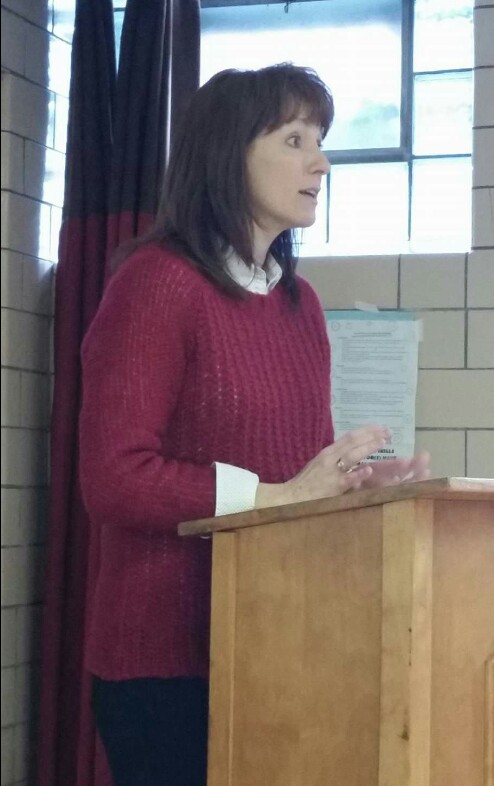
20161211_121241Five schools, hundreds of students. I remember their faces and many of their names. More than once this semester I looked out at them looking back at me and thought, “This is crazy; how in the world did I get here?”

Well, I’m here primarily because while I thought that typing “The End” was the end, there’s a growing body of professors and helping professionals who have decided that Leaving Dorian is only a beginning.

When asked the first time if I would speak to a group of college students – as a sort of companion piece to the book – I was extremely hesitant. I didn’t think I had anything left to offer. I remember asking my husband, “I’ve already exposed my soul on paper; what else is there?” Turns out there are volumes that remain unwritten and there are students who are eager to read each and every page.

Because each class is learning about intimate partner violence from a different perspective, what I’ve set out to do is to become a living research project, of sorts. I encourage the students to poke around – to take a good look around my mind and heart and see for themselves what abuse looks like from the inside out. The goal is to see if they can connect the dots from my experience to what they’ve learned about in class.

The opportunity that I offer them isn’t an easy one; it takes real courage to look someone in the eye as you’re cutting them open, even when they’re the one who handed you the scalpel. But these young adults rise to the challenge; they take that scalpel and they cut and try and peel back the layers. They poke around and try and find the answers that they’ve read about but have not seen with their own eyes. Sometimes they find what they’re looking for easily and we build on their enthusiasm by cutting a little more, digging a little deeper. Other times I don’t have the answer; I don’t know exactly what they’re looking for (sometimes they don’t really know, either) and I ask them to try again. Cut again, I encourage them. Keep digging. Here, I’ll help you. They cut here and see what’s under there; they dig and I encourage them and their professors guide them and we, as a collective, try to extract the answers.

I’ve received stacks of glowing student evaluations this semester, most of which describe me as “brave”, “courageous” and “inspirational”. It’s heartening to know that the students view me in this way, but I have to admit that I would describe them in exactly those same terms; studying to be a helping professional isn’t for the faint of heart.

Fall semester 2016 was fantastic and I’m looking forward to revisiting new students in these courses again during the Fall of 2017!

20161211_162752

The Niagara University campus was WINDY that evening, though my frazzled appearance might also have something to do with the fact that I spent three hours hashing it out with these students from Dr. Dana Radatz CRJ 585 Domestic Violence class. I have real affection for this group, as I still see many of them when I visit the NU campus for other DV related events.
20161130_191119

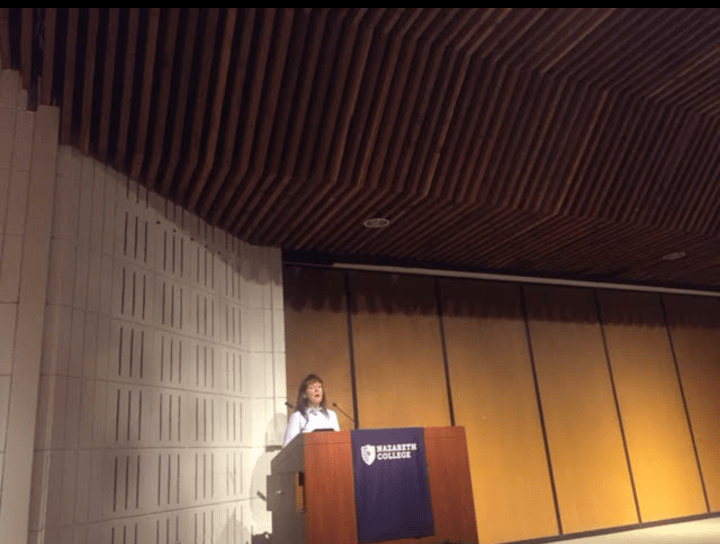
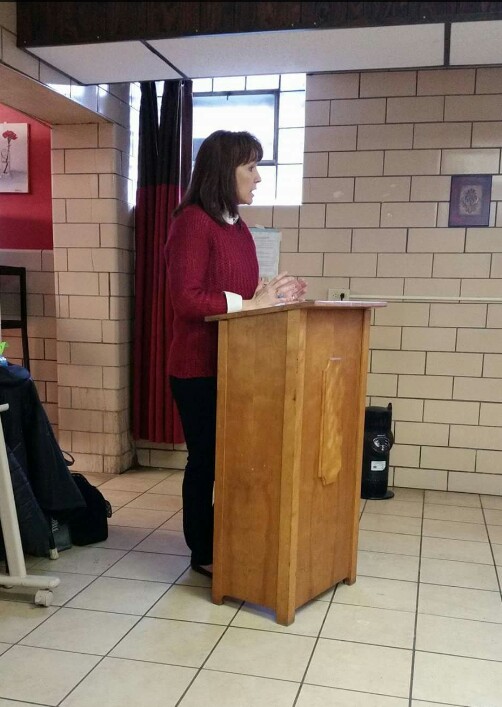
You just never know what you’re walking into when you visit a campus for the first time. Nazareth’s Health Center brought me in for an evening presentation in support of DV Awareness Month. The podium was unlike any I’d used before (short!) and I couldn’t see my notes, even with my readers on. I tried to remedy the situation by kicking off my heels about ten minutes in but as it turned out, shorter wasn’t better. So… I ended up delivering the entire presentation sans shoes, notes and readers 🙂

20161130_191059

Because it was a campus-wide event, there were faculty and students from many different disciplines in attendance. Such great questions for me and interesting discussion afterward! I also loved that I was able to spend extra time with students who wanted to speak with me one-on-one long after the scheduled presentation time had come and gone.
img_20161015_113245

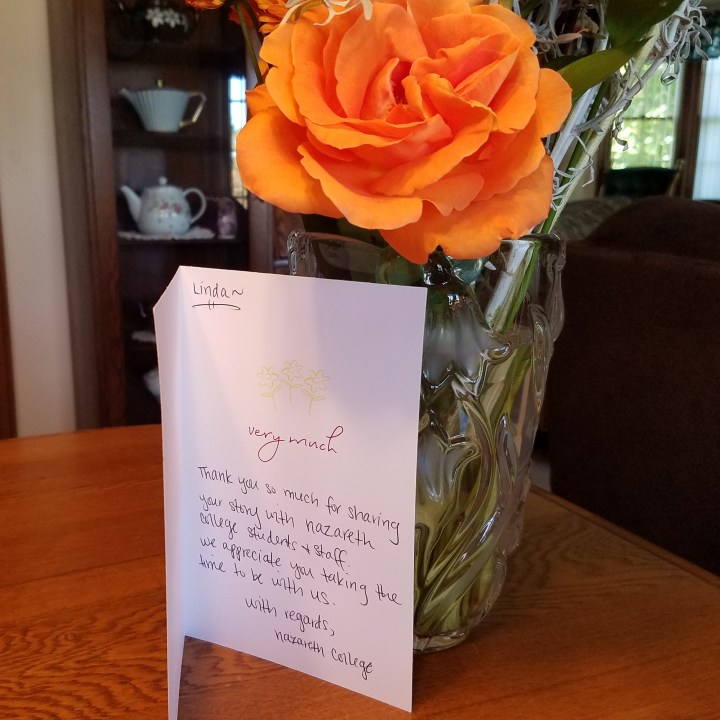
Presented to me by the Health Center interns: “Thank you so much for sharing your story with Nazareth College students and staff. We appreciate you taking the time to be with us.”

20161026_172725

Two day event in the Finger Lakes region for Hobart and William Smith Colleges.
20161025_185641

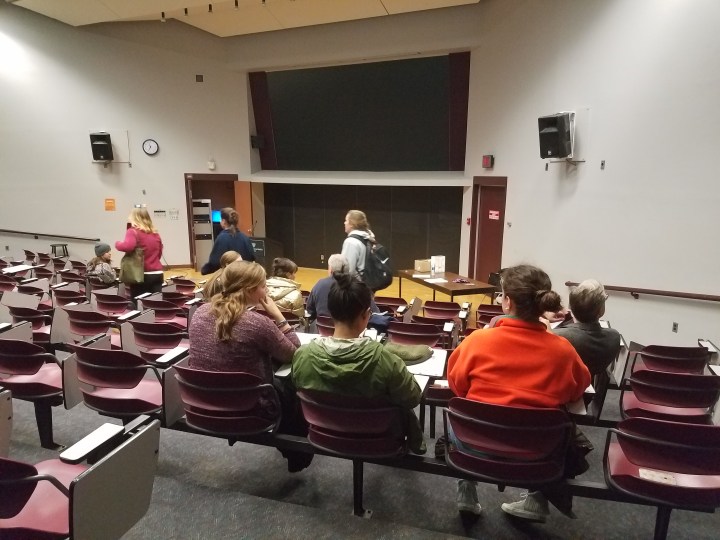
The room filled up with students and professors pretty quickly (past and present – some even brought their parents!) but there were folks from the community in attendance, as well.

20161026_184236

Talking about Emily Carson, a young mother of three who was murdered in downtown Geneva in February of 2016. She was shot twice by her boyfriend before he turned the gun on himself. It all happened one quiet Sunday morning while dozens of innocent bystanders became unintentional witnesses. His family was quoted afterward as saying that he “…wasn’t a violent guy.” I talk about how quickly an emotionally abusive relationship can turn violent, especially once a victim leaves or tries to leave.
 

20161026_184011

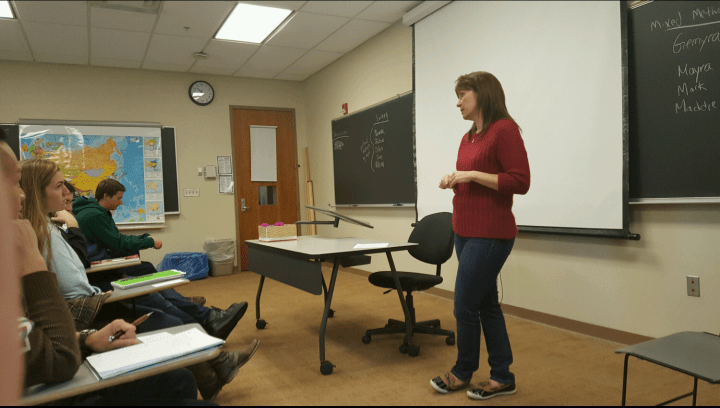
And this is how we do it – taking questions from Dr. Jim Sutton’s undergraduate Social Deviance class, Hobart & William Smith Colleges.

img_20161026_190659

Book signing 🙂 By the end of the class, many of the students are comfortable enough to share their own stories with me. Honestly, this is my favorite part of any presentation – meeting the students one-on-one!
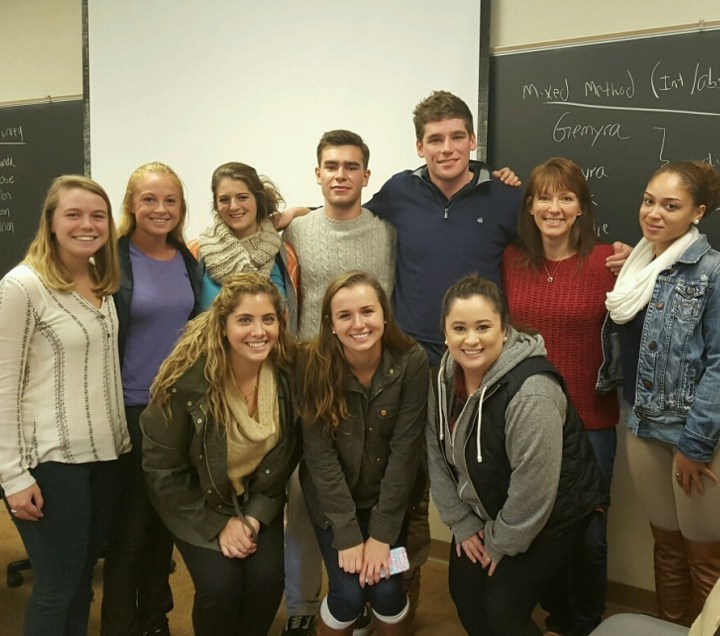
img_20161026_191006

I wish my own children were as enthusiastic about having their picture taken with me as my students are! About half of the class is pictured here.

img_20161109_224736

I always take a very relaxed approach to presentations because the material can get extremely graphic and emotional. Reactions run the gamut; there are students who spend the entire class period furiously scribbling notes while others will cringe, get visibly agitated or need to leave the room to compose themselves. There are always survivors of violence in the room – always – and Dr. Noelle St. Vil’s Social Work class at the University at Buffalo was no different.
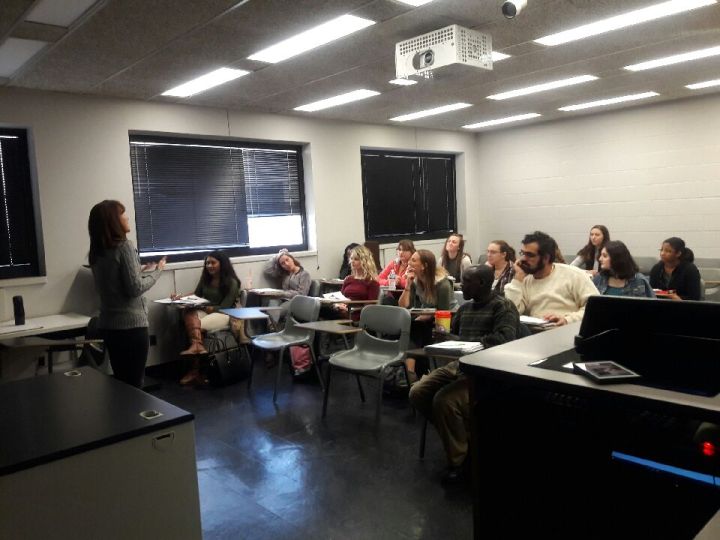
20161108_092610_14787361740951

It was very early on in this “public speaking” thing that I realized that I was going to need to sprinkle in a little levity here and there. When I smile, the students smile. When I poke fun, they laugh. It’s an essential element to making sure that the students can “hear” me. Yes, I tell them, what I lived through is terrible and no, it wasn’t fair and yes, I bear the scars of it – but – my life continues to move on and here are some of the dozens of silly, crazy, ridiculous stopping blocks I’ve had to overcome in the years since I left.
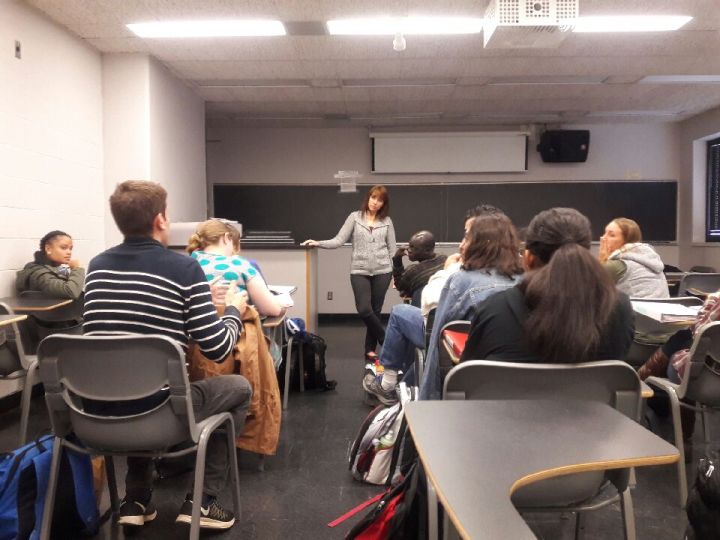
20161108_103547_14787363121271

Many graduate students are already working in the field; staffing shelters, working at local help centers or with law enforcement. Their timely, real-world anecdotes are helpful in generating discussion that goes beyond my experience and what they’ve learned about in class.

img_20161129_213203

I’d never Skyped a class before, so I was more that a little concerned that I wouldn’t be able to gain the emotional momentum needed to connect with the students. Happily, within minutes I realized that it wasn’t going to be an impediment; the students in Dr. Angie Moe’s SOC 4950 Family Violence Class at Western Michigan University made the best of the unusual set-up and filled the hour with really thoughtful, specific questions.

Presentation Reviews

Standard

20161228_090617“I have been talking to my class as well as to folks who attended your evening presentation.  Everyone has shared thoughts that contained words like ‘amazing’, ‘incredible’ and ‘powerful’.  It is clear to me that your visit made an important contribution to their learning.” – Dr. James Sutton, Professor of Sociology, Hobart & William Smith Colleges

“I really appreciated how you were able to talk about such difficult material in an honest and down-to-earth manner. The Skype session with you was clearly the stand-out class period of the semester. It’s certainly not every day that college students can speak directly to the author of one of their reading assignments! You both reinforced and enhanced our collective understanding of the dynamics involved with intimate partner violence. We admire and respect you greatly.” – Dr. Angie Moe, Professor of Sociology, Western Michigan University

“I assigned ‘Leaving Dorian’ to my graduate level Domestic Violence course. From the very start, my students were enthralled and invested in her story. This was not only apparent in our class discussions, but also when Linda visited my class as a guest speaker; the three-hour time frame for the one-day per week course seemed to pass within minutes rather than hours, as we sat in a circle informally discussing her book. Linda’s visit was invaluable, not only to my students, but also to me. So much of what Linda shared in her visit with students aligned with my course material. Linda’s name frequently arose in classes after her visit, as many of the students (as well as myself) referenced Linda in subsequent classes. The ability to use examples from Linda’s book and her class visit was incredibly beneficial when teaching challenging concepts and driving home important points. Also, I find it important to note that at the end of the semester, when I asked for informal feedback on the course, every one of my students mentioned that Linda’s book and her visit were “absolute musts” for my future classes. Without a doubt, I firmly believe Linda positively impacted my students’ understanding of domestic violence, and cannot wait to have her visit Niagara University in future semesters!” – Dr. Dana Radatz, Professor of Criminology, Niagara University

From Student Evaluations Administered After Presentations:

The one thing I found most helpful about this presentation was:  “The openness of the conversation. We were allowed to ask whatever questions we were wondering.” – “How honest and understanding she was.” – “The statistics she gave were eye-opening and I really loved that she gave out packets of data, as well. She made her story so open and honest to us; it made it so real and incredibly motivating.” – “It was more of a discussion and not a strict lecture. She was very personable, funny and friendly.” – “The open discussion format. I liked the different directions that the presentation went in due to our ability to ask questions continuously.”  – “Her candor and honesty about a very difficult topic.” – “How open and honest she encouraged us to be.”

Other comments: “I love your style of presentation. Amazing experience!”  – “I really enjoyed your presentation and conversation we had!” – “I think your current role in the world is very important. Everyone needs to hear your story and other stories like it so we may be one step closer to implementing change.” – “I am so very thankful for Linda Dynel and strong individuals like herself who so bravely share their stories to educate and help complete strangers. It is because of people like her that brings bursts of light to those who feel they are alone in the dark.” – “Emotional and wonderful experience. Painful but cathartic.” – “So awesome! This book should be required by all colleges for their students to read!” – “This was an amazing presentation and I felt like it improved me as a person and as a social worker.” 

“Think About It” Thursdays

Standard

20161113_070014“During the 19th century, some legal actions were taken to address the most extreme forms of battering. However, since battering was socially and legally acceptable, most of these new laws were simply intended to regulate the level of violence used and the severity of injury allowed. Examples of such laws ranged from the common law rule of thumb to more modern certain rule and stitch rule. The certain rule of the mid-1800s indicated that no outside interference would occur in wife battering unless the husband created a permanent injury to the wife. The stitch rule of the early 1900s cautioned men not to cause injuries requiring stitches because police could be called to intercede in such situations….laws concerning battering developed from a foundation of acceptability and regulation rather than one of social disapproval and criminalization.”

*Excerpted from Self-Defense and Battered Women Who Kill: A New Framework , Ogle/Jacobs, (2002)

“Surviving…Thriving: A Journey of Healing Through Art” Castellani Art Museum, October 27, 2016

Standard

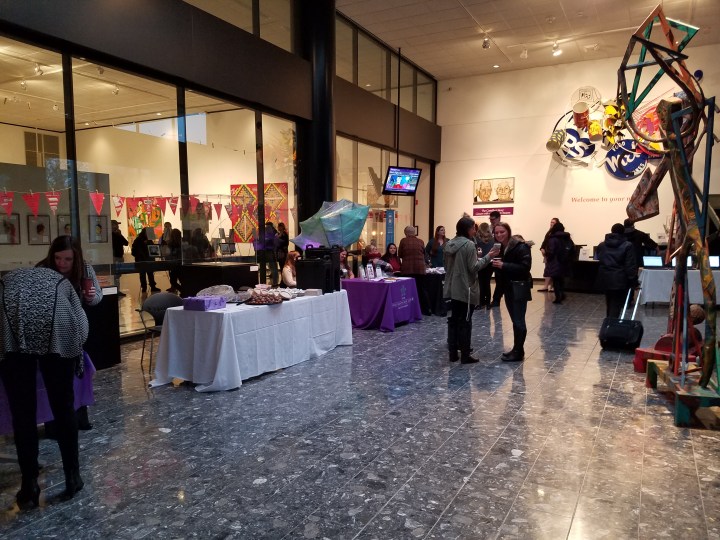
Music played softly in the gallery and advocates from local help agencies answered questions and offered information and guidance at tables set up in the lobby as students, faculty and members of the surrounding community viewed about 80 pieces of art created by survivors of domestic violence in a special exhibit at Niagara University’s Castellani Art Museum.

“This is the first year Niagara University has been part of the event. NU students have created a red flag – part of the national Red Flag Campaign, which addresses the red flags of dating violence, said Karrie Gebhardt, director of domestic violence and parenting services at Family and Children’s Services of Niagara. The initiative is a campaign to remind people to ‘say something’ if they see the signs of dating violence in a friend’s relationship. Some of the red flags include, coercion, jealousy, stalking, emotional abuse, sexual assault, isolation and victim blaming.

Eileen Wrobel, a Niagara Falls Police domestic violence victim advocate, facilitated the art exhibit with survivors through the Windows Between the Worlds art program.” – Nancy Fisher, Buffalo News, October 20, 2016

20161027_165301

“No matter what anyone says or how they try and justify the behavior, it is not O.K. to be treated poorly by anyone. Especially when they call it love.”

20161027_165616

This is the piece that brought me to tears; even now, it’s hard for me to look at.

20161027_165504

“If I can say anything to convince you to leave before it’s too late, (I’d say) ‘It’s not worth it and there is better love.’ I am a survivor by the grace of God.”

20161027_165955

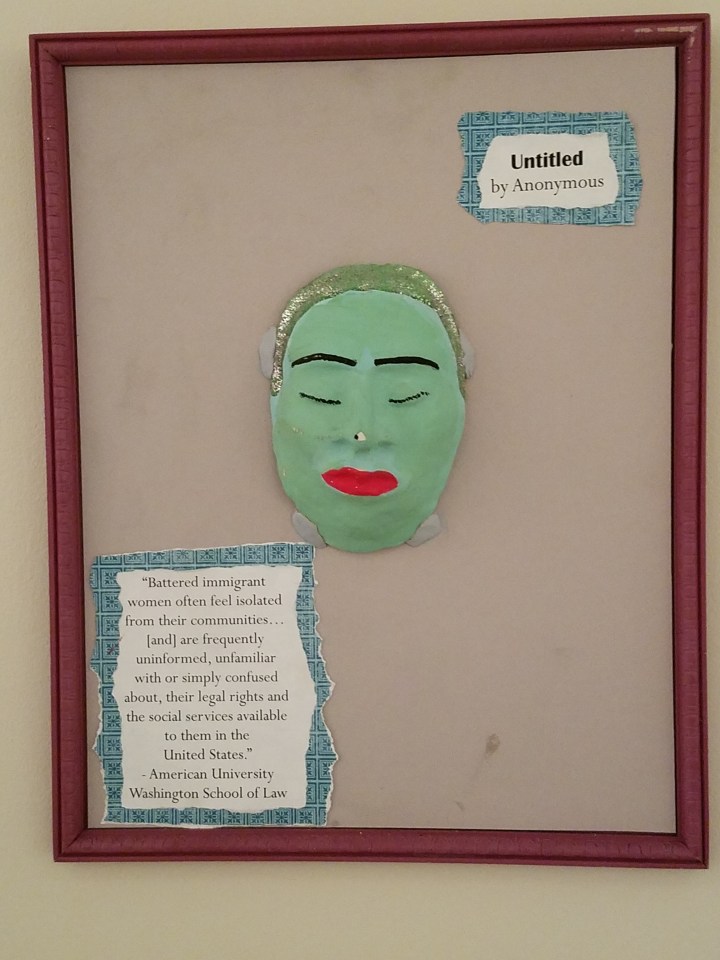
I had a student ask me at a recent event if her friend (who is being battered, but who is also struggling with immigration issues) would be arrested and/or deported if she reached out to authorities for help. The above piece perfectly illustrates this often times overlooked issue.

20161027_165846

Oil on canvas

20161027_165712

The Silent Witness Project is a traveling project created in 2016 by high school senior Andrew Villella as his Eagle Scout Project. It is a reconstruction of the original life-sized project built in 2006 when there were only nine victims. Each figure represents an individual who once lived in Niagara County whose life was ended violently at the hands of a spouse, former spouse or intimate partner.

20161027_170006

More than 200 students attended this eye-opening event

20161027_170031

Dr. Dana Radatz, Criminology professor at Niagara University, was instrumental in bringing this event to fruition.

20161027_170123

The YWCA, The Child Advocacy Center of Niagara and Niagara University’s Counseling Center were among the community and campus based help centers who donated their time in order to offer information and guidance to those in attendance.

20161027_165048

A big “Thank You” to Karrie Gebhardt for graciously sharing the Family & Children’s Services table so that Leaving Dorian might be displayed.

“A Tribute To Women” The YWCA of the Niagara Frontier 2016 Niagara Awards

Standard
ywcazonta

The fantastic women who nominated me – Representing The Zonta Club of Niagara Falls, NY – Janice Lewis, Kyle Patterson and Bonnie Crogan-Mazur. I was surprised and extremely honored to win the “Entrepreneur” category.

Upon acceptance of the beautiful award I said: “Leaving Dorian had been out for about a year when I received an email from Bonnie Crogan-Mazur asking if I would like to come and speak to the ladies of The Zonta Club of Niagara Falls at one of their meetings. Now what I wanted to say was, ‘No! No I DO NOT want to come and stand in front of a group of strangers and talk about my book and my  own experience with domestic violence. I’m extremely shy by nature which is why I’m a writer; I sit in front of a computer all day by myself. That is my comfort level…!’ But instead I said ‘yes‘ and I’m so glad that I did. The ladies of The Zonta Club of Niagara Falls completely changed the trajectory of my career. I simply wouldn’t be where I am today with out them and I will be forever grateful.”

** cue ugly cry……. :/

Academic Reviews of “Leaving Dorian”

Standard

“I (enjoyed) your eloquent book (Leaving Dorian). The writing was great and I loved the way you juxtaposed the leaving chapters, reminding everyone it is a process, not a single event, with the rest of the relationship. The details were all too familiar from dozens of other similar cases, many with not such happy endings. I think we need to put a much greater emphasis on the ‘safety work’ women do after they get out.” – Evan Stark, Ph.D, MSW, Professor Emeritus, Rutgers University and author of “Coercive Control: How Men Entrap Women in Personal Life”

“Linda Dynel’s Leaving Dorian is an impactful read, and one I assign regularly in my graduate Domestic Violence courses. Leaving Dorian provides my students with insights on the adversities and challenges that survivors may experience, both during and after their violent relationship. Further, Dynel’s book highlights foreshadowing life experiences prior to her relationship with Dorian, which help students understand risk factors and red flags associated with unhealthy relationships, as well as the evolution and cyclical nature of domestic violence. Assigned as the first book of the semester, my students consistently discuss and relate Dynel’s book to other class readings and material throughout the remaining semester, and frequently share that it is their favorite read of the class. It is readily apparent that Leaving Dorian resonates with them long after they finish reading the book, as it provides students with a glimpse into one survivor’s harrowing journey to escape relationship violence. In short — Dynel’s Leaving Dorian is a must read!” – Dana L. Radatz, Ph.D., Assistant Professor, Criminology & Criminal Justice, Niagara University

“Linda Dynel’s gripping account of the ongoing abuse she endured while living with her now ex-husband Dorian serves as a wake-up call to all human service professionals. Not only must we conduct assessments of our clients we fear may be at-risk for domestic violence but reach out into the communities where we work.  As Ms. Dynel reveals in her book, domestic violence is insidious: victims of abuse are often not in a position to reach out for help on their own behalf. Instead, it is incumbent on professionals to become more attuned to the dynamics of domestic violence; educate other health and human service professionals to do the same; and advocate on behalf of victims for services that are adequate, appropriate, and accessible.” – Robert H. Keefe, PhD, ACSW, Associate Professor, University at Buffalo School of Social Work  

“I chose Leaving Dorian for my Domestic Violence course based on the recommendation of a respected Victimologist. I am SO glad I did. The book served as the ‘focal point’ of our entire semester, and we were able to apply all of the principles we’d discussed in class about intimate partner violence to Linda’s real experience. For my students, some of the aspects of the book that stood out were religious abuse, psychological abuse, the effect of abuse on children, and how truly hard it is for a person to leave an abusive situation. We spent an entire week of class time just discussing this book in detail. I have had several students tell me this was the most worthwhile read of our entire semester together; it is an easy and powerful read that moves at a fast pace. I am so grateful Linda wrote about her harrowing ordeal in such detail. I truly believe this book has changed my students’ lives.” – Dr. Danielle Slakoff, Assistant Professor of Criminology and Justice, Loyola University New Orleans

“The DV community owes you a huge thank you for putting yourself out there so honestly and bravely. It’s quite common and easy for people who haven’t been in a violent relationship to pass judgement, especially when kids are involved. You so effectively dispelled many of the common stereotypes, which is just so critical in higher ed. I can lecture until I’m blue in the face but it doesn’t have near the impact of a first hand account. The other piece that will be so effective is the support you will provide other survivors. It is very easy (for victims) to feel alone and to think you’re the only person this happened to. As an academic-activist, I can also say that it was very helpful to come across your book as there does not seem to have been much published from a personal account in recent years.” – Dr. Angie Moe, Professor of Sociology, Western Michigan University

“I decided to use Leaving Dorian because it humanizes topics we cover in my class.  I always cover topics pertaining to men’s violence against women, and I like to use items that help students better understand these topics in ways that go beyond the sensationalized (and depersonalized) ways in which they typically hear about them.” – Dr. James Sutton, Hobart and William Smith Colleges 

“I REALLY liked the book – found it very engaging and hard to put down, though it was also painful to read. It’s the kind of story that a LOT of women can relate to. It is a very fine contribution to the growing body of literature on this horrendous problem of intimate partner abuse.” – Dr. Maureen Hannah, NYS Licensed Psychologist and Professor of Psychology, Siena College

Willful Blindness

Standard

20160607_062759

Why do people tend to turn a blind eye to domestic violence?

“…even in the face of facts that people understood to be evidence of abuse, no one helped. Why? Because (Sheila) did not ask for help? Probably not. Because these (family members, friends, co-workers, neighbors) are uncaring people? No. Help did not come because domestic violence is an awful thing to know about. And when we know about it, we do not know what to do. Domestic violence invites what we might understand best as willful blindness, an unwillingness to discover the facts that will force us to confront the reality that we want to avoid.”*

*Excerpted from Self-Defense and the Battered Woman, Ogle and Jacobs, 2002, in the matter of People v. Beasley

Patriarchal Terrorism

Standard

patterrI like words. Well, yeah… I write, so…you’d think. But not just any words; I like the right words. I like words (and phrases) that make you perk up and take notice. More specifically, I like descriptors that are so narrow, so specific, that when you read them you think, “Yes! That’s it! That’s exactly the right way to phrase that!”

I first saw the words “Patriarchal Terrorism” a couple of weeks ago; I was reading a paper written in the mid-nineties by Michael P. Johnson. Immediately upon seeing those two words pushed together on the page, I literally got up, went my computer and started Googling the phrase to see what other articles and information might be associated with it.

Terrorism. It’s a word that’s all too common in our post 9/11 world, but in 1995, “Terrorism” wasn’t a word that was thrown around lightly. It wasn’t a part of our daily vernacular. And yet here was this paper written twenty years ago, using it in regard to domestic violence. The paper was published a month before my older daughter was born, just a few short months before my ex-husband put his hands on me for the first time, nearly killing me.

“Patriarchal terrorism, a product of patriarchal traditions of men’s right to control ‘their’ women, is a form of terroristic control of wives by their husbands that involves the systematic use of not only violence, but economic subordination, threats, isolation and other control tactics….The terminology ‘battered wife’ is objectionable on the grounds that it shifts the focus to the victim, seeming to imply that the pattern in question adheres to the woman rather than to the man who is in fact behaviorally and morally responsible (sic) The term ‘patriarchal terrorism’ has the advantage of keeping the focus on the perpetrator and of keeping our attention on the systematic, intentional nature of this form of violence.”*

Patriarchal Terrorism. Yes, those are just the right words to describe what I lived through. That is domestic violence.

*Excerpted from “Patriarchal Terrorism and Common Couple Violence: Two Forms of Violence Against Women” by Michael P. Johnson, Journal of Marriage and Family, Vol. 57, No.2, (May 1995),283-294

Rule Of Thumb

Standard

20160421_083439Did you know that the phrase “rule of thumb”is actually derived from British Common Law codified by Sir William Blackstone in 1768?
“While Blackstone never attempted to criminalize battering, he did create the first effort to regulate the severity of allowable battering. He codified the ‘rule of thumb’ stating that a husband had the legal right and responsibility to control and punish his wife. However, that punishment was to be done with a stick no bigger than the husband’s thumb.”*

We give a lot of lip service to putting an end to domestic violence, but how far have we really come in the last 250 years in what we believe is acceptable behind closed doors? To that end, how often do we reference our partner/spouse in terms of property or ownership by using possessive words like “mine”? Objectification is like a gateway drug; it feeds selfishness and ego and impedes us from seeing someone as wholly their own person, to be valued and respected aside and apart from our own needs, wants and desires.

*Excerpted from Self-Defense and Battered Women Who Kill: A New Framework , Ogle/Jacobs, 2002