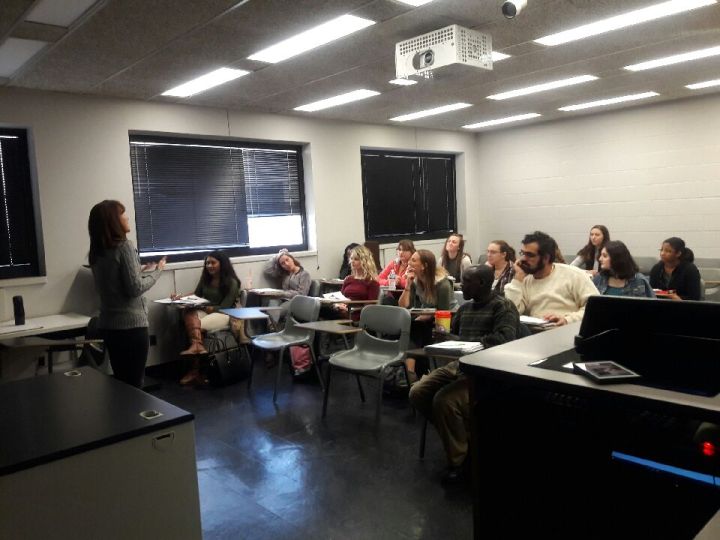
Public Presentation!

Standard

Though I’ve done public presentations before, this will be my first in the Niagara Region! Please join me for this free event. Q & A and book signing to follow – bring your copy of Leaving Dorian or purchase a paperback copy at the event! ($20 – cash only, please)


Videos/Educational

Standard

20171121_083705

Miss Representation: You Can’t Be What You Can’t See  A Documentary Film by Jennifer Siebel Newsom

Tough Guise: Violence, Media & The Crisis in Masculinity  with Jackson Katz

Tough Guise 2: Violence, Manhood & American Culture  featuring Jackson Katz

The Mask You Live In: Is American Masculinity Harming Our Boys, Men & Society at Large?  A Film by Jennifer Siebel Newsom

Feminists: What Were They Thinking? A Documentary Film by Johanna Demetrakas

The Bystander Moment: Transforming Rape Culture at its Roots featuring Jackson Katz

Never Say Never: “In Her Shoes”

Standard

20171031_085032No matter how compassionate or understanding a person you think you are, at some point you’re going to be a little judge-y.

*shrug*

O.K.

Everybody scoffs. Everybody – everybody – shakes their head and screws up their mouth and (in a moment of weakness) decides that the way that someone else is choosing to conduct themselves is wrong. We look at someone’s life or their current situation or their reaction to a rough patch and think, “I would never do that!” This is especially true of domestic violence. Comments like, “I would never let a man put his hands on me!” or “I would never put my children through that!” are incredibly common.

And so … maybe that’s actually the case. Maybe you wouldn’t. Maybe your reaction would be different than someone else’s. But then again, how can you be sure? The reality is that until you’re in a given situation, you really don’t know how you’d react.

Because I work with DV victims and survivors as well as those who serve them, I was honestly of the opinion that I (mostly) understood the overall plight of the battered woman. Fortunately for me, I live in a county where the local FCS (ours is Family & Children’s Service of Niagara) offers the In Her Shoes DV Awareness Program.
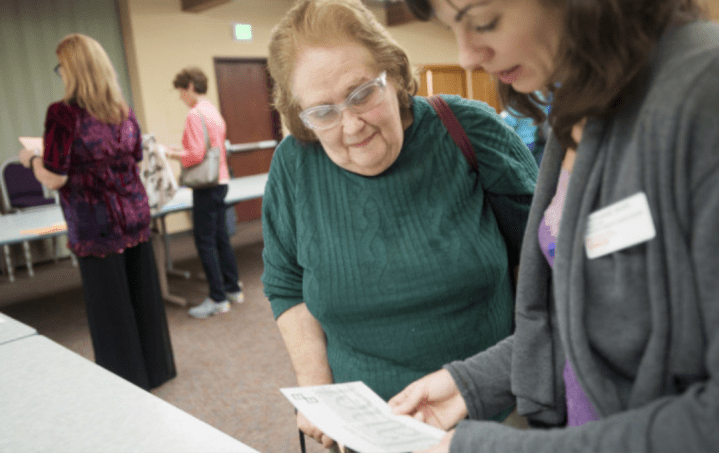
Published in 2000 by the Washington State Coalition Against Domestic Violence, In Her Shoes is “…a revolutionary community education tool, designed for learning about domestic violence. Participants move, do, think and experience the lives of battered women.” Photo Courtesy of The Columbian, 2015.

I initially registered to attend because while I’ve worked with Family & Children’s Service of Niagara in the past, I was recently made aware that their Director of Passage House, Larissa Bachman, is using Leaving Dorian as a supplemental read with their interns. It got me to thinking that while I know quite a bit about FCS, I know little about the inner workings of Passage House. I thought what a great opportunity to speak candidly with Larissa and her team and as a bonus maybe do a blog post about the In Her Shoes Program.

I was completely unprepared for the experience that followed.

Participants were brought into a mixed-use room where I’d worked previously, only this time instead of rows of chairs there were long tables with stacks of colorful note cards. Each table had a sign attached: “Social Services”, “Hospital”, “Employment”, etc. Attendees were then paired up and we were told to pick a person’s name from the starter table. After that the journey begins; you are to make choices for your person while reading their perspective (as well as their batterer’s perspective) from each side of the card.

Because I’m a survivor of DV and because I work with amazing DV professionals and ridiculously intelligent and well-read professors and because I, too, have chosen to be well-read on the topic, I walked into the exercise feeling confident that I could help my person to avoid the inevitable pitfalls. There was no doubt in my mind that I would be able to guide her into a healthy lifestyle well within the hour or so time frame we’d been given to complete the exercise.

Within minutes I realized that I was wrong.

There’s no way that you can prepare yourself to be given the opportunity to make every choice from beginning to end and still “fail”. There’s no way to prepare yourself to walk through nearly forty-five minutes with a person (yes, a person written on paper, but one that you slowly and inadvertently invest yourself in) just to get to the last card and have it say “Funeral Home”.

I couldn’t believe it. Tears started to well in my eyes. I stood there trying to figure it out; why was the end result so hard to take? I mean, I thought I had it. I thought I knew. I am the “Her” in “In Her Shoes”, after all! I’ve been there. I’ve done that. And even beyond my own experience – as an author who’s made myself extremely accessible on social media – I routinely hear the most sad, perplexing and gut wrenching stories from victims and survivors alike. I thought nothing could surprise or shock me. And yet, tears.

I was seriously under the weather and probably should have stayed home that day, so I immediately wanted to blame it on that; I simply wasn’t feeling well. But the young woman that I was paired with didn’t like the ending either. I said, “Let’s go back…” So we did. Our character was young; not even eighteen. We had her go home. And yet, three cards in, she was right back in a tough spot. I suggested we go back even further, maybe right back to the second card that we read.

I was shaken. That couldn’t be her ending. I refused to finish the exercise. I simply would not walk over to the wall marker that said “Funeral Home”. There was nothing but an empty table in front of it. No more cards. It was left empty for reflection, but I didn’t want to reflect. I dried my eyes as the group sat down for debriefing.

I was happy to find out that not every story ended as tragically as ours. Other groups did manage to successfully maneuver their people into new lives. It’s worth noting, though, that at times these groups had to make choices for their person that weren’t always in line with their real-life belief systems. Again, an incredibly important lesson: You cannot impose your value system on someone else. Hard to hear? Sometimes, yes. But a necessary message? Absolutely.

Of course Ms. Bachman and her team were excellent facilitators and I’d like to believe that every attendee walked out that afternoon with all of their questions answered and with a deeper appreciation of the level of strength, courage, creativity and (sometimes) blind faith that victims routinely have to possess in order to safely and successfully re-start their lives. I know that I did. It was a humbling experience that I will carry with me; one that will necessarily be reflected in every presentation and classroom discussion that I participate in from now on.

I’m incredibly proud to be able to say that Family & Children’s Service of Niagara is my hometown service provider and that the staff there is offering unique, high-quality community education programs like In Her Shoes. Programs like these (offered in house or off-site) are exactly what HR professionals are looking for when putting together sensitivity training for Staff Development Days. Their utilization can only heighten awareness and bring about much needed change in our thought processes (and eventually, our behavior toward) victims of domestic violence.

If you are in Western New York, you can contact FCS of Niagara to schedule an In Her Shoes program experience at http://www.niagarafamily.org or by phone: (716) 285-6984

If you or someone you know is a victim of domestic violence and is need of assistance, FCS of Niagara 24/7 Emergency Hotline is: (716) 299-0909

To purchase the In Her Shoes program please contact http://www.wscadv.org



What Is Financial Abuse?

Standard
  • Forbidding the victim to work
  • Sabotaging work or employment opportunities by stalking or harassing the victim at the workplace or causing the victim to lose her job by physically battering prior to important meetings or interviews
  • Controlling how all of the money is spent
  • Not allowing the victim access to bank accounts
  • Withholding money or giving “an allowance”
  • Not including the victim in investment or banking decisions
  • Forbidding the victim from attending job training or advancement opportunities
  • Forcing the victim to write bad checks or file fraudulent tax returns
  • Running up large amounts of debt on joint accounts, taking bad credit loans
  • Refusing to work or contribute to the family income
  • Withholding funds for the victim or children to obtain basic needs such as food and medicine
  • Hiding assets
  • Stealing the victim’s identity, property or inheritance
  • Forcing the victim to work in a family business without pay
  • Refusing to pay bills and ruining the victims’ credit score
  • Forcing the victim to turn over public benefits or threatening to turn the victim in for “cheating or misusing benefits”
  • Filing false insurance claims
  • Refusing to pay  or evading child support or manipulating the divorce process by drawing it out by hiding or not disclosing assets

Excerpted from nnedv.org

What Is Gaslighting?

Standard

“Gaslighting is a colloquial term that describes a type of psychological abuse in which the abuser denies the victim’s reality, causing him/her to question him/herself, his/her memory, or his/her perceptions. The term gaslighting is also sometimes used to apply to the use of inflammatory behavior or language that provokes someone to behave in an uncharacteristic way. Gaslighting is often used an abusive tactic by those with narcissistic and psychopathic personalities. The aim of the abuse is to make the victim doubt his/her perception of reality, and gaslighting tactics can be entirely verbal or emotional.

Often, victims of this abuse may start out by challenging the perpetrator, who then turns the situation around by gaslighting them. In doing so, he or she causes the victim to question themselves and in doing so, draws attention away from the abuse. For example, someone might claim that his or her partner engaged in name-calling, yelling, or breaking of that person’s possessions. The partner might avoid taking the blame with gaslighting techniques such as denying that the events ever took place, or pointing out that other person’s transgressions were at fault.

An individual may gaslight another by:

  • Refusing to listen to any concerns or pretending not to understand them.
  • Questioning his or her memory, denying that events occurred in the way the victim (accurately) remembers.
  • Changing the subject to divert the victim’s attention from a topic, trivializing their concerns.
  • Pretending to forget things that have happened to further discredit the victim.
  • Denying events have taken place, claiming that the victim is making them up”

Excerpted from http://www.goodtherapy.org


What Is Stalking?

Standard

The kinds of acts that make up stalking include, but are not limited to, the following:

  • Following or surveillance
  • Inappropriate approaches and confrontations
  • Repeated, uninvited appearances at work or residence
  • Unwanted telephone calls or texts
  • Threatening the victim
  • Threatening the victim’s family and friends
  • Unwanted letters, e-mails, gifts
  • Repeatedly sending unwanted emails or texts to the victim
  • Using online social media inappropriately
  • Damaging the victim’s property
  • Physical assault
  • Sexual assault
  • Assaulting or killing the victim’s pet
  • Spreading false rumors
  • Filing false charges

Excerpted from Los Angeles College Consortium and usc.edu

What Is Emotional Abuse?

Standard

Any act including confinement, isolation, verbal assault, humiliation, intimidation, infantilization or any other treatment which may diminish the sense of identity, dignity or self-worth. Some examples are: yelling or swearing; name calling, insults or mocking; threats and intimidation; isolation; humiliation; denial of the abuse and blaming the victim.

Excerpted from http://www.healthyplace.com

Fall Semester, 2016

Standard

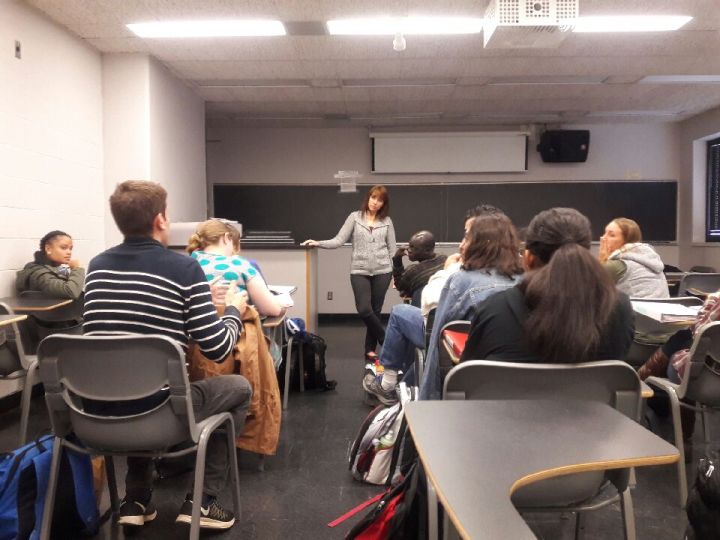
20161211_121241Five schools, hundreds of students. I remember their faces and many of their names. More than once this semester I looked out at them looking back at me and thought, “This is crazy; how in the world did I get here?”
Well, I’m here primarily because while I thought that typing “The End” was the end, there’s a growing body of professors and helping professionals who have decided that Leaving Dorian is only a beginning.

When asked the first time if I would speak to a group of college students – as a sort of companion piece to the book – I was extremely hesitant. I didn’t think I had anything left to offer. I remember asking my husband, “I’ve already exposed my soul on paper; what else is there?” Turns out there are volumes that remain unwritten and there are students who are eager to read each and every page.

Because each class is learning about intimate partner violence from a different perspective, what I’ve set out to do is to become a living research project, of sorts. I encourage the students to poke around – to take a good look around my mind and heart and see for themselves what abuse looks like from the inside out. The goal is to see if they can connect the dots from my experience to what they’ve learned about in class.

The opportunity that I offer them isn’t an easy one; it takes real courage to look someone in the eye as you’re cutting them open, even when they’re the one who handed you the scalpel. But these young adults rise to the challenge; they take that scalpel and they cut and try and peel back the layers. They poke around and try and find the answers that they’ve read about but have not seen with their own eyes. Sometimes they find what they’re looking for easily and we build on their enthusiasm by cutting a little more, digging a little deeper. Other times I don’t have the answer; I don’t know exactly what they’re looking for (sometimes they don’t really know, either) and I ask them to try again. Cut again, I encourage them. Keep digging. Here, I’ll help you. They cut here and see what’s under there; they dig and I encourage them and their professors guide them and we, as a collective, try to extract the answers.

I’ve received stacks of glowing student evaluations this semester, most of which describe me as “brave”, “courageous” and “inspirational”. It’s heartening to know that the students view me in this way, but I have to admit that I would describe them in exactly those same terms; studying to be a helping professional isn’t for the faint of heart.

Fall semester 2016 was fantastic and I’m looking forward to revisiting new students in these courses again during the Fall of 2017!

20161211_162752

The Niagara University campus was WINDY that evening, though my frazzled appearance might also have something to do with the fact that I spent three hours hashing it out with these students from Dr. Dana Radatz CRJ 585 Domestic Violence class. I have real affection for this group, as I still see many of them when I visit the NU campus for other DV related events.

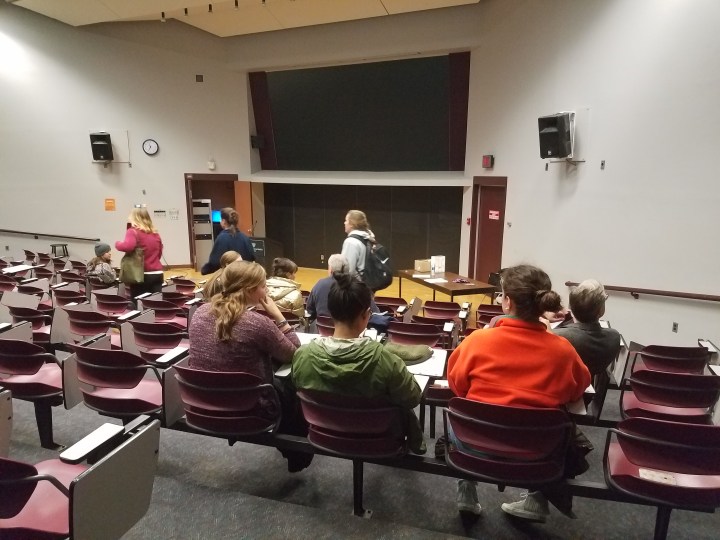
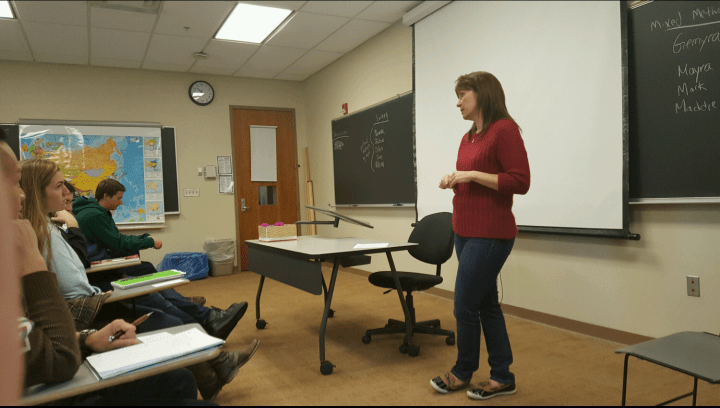
20161130_191119

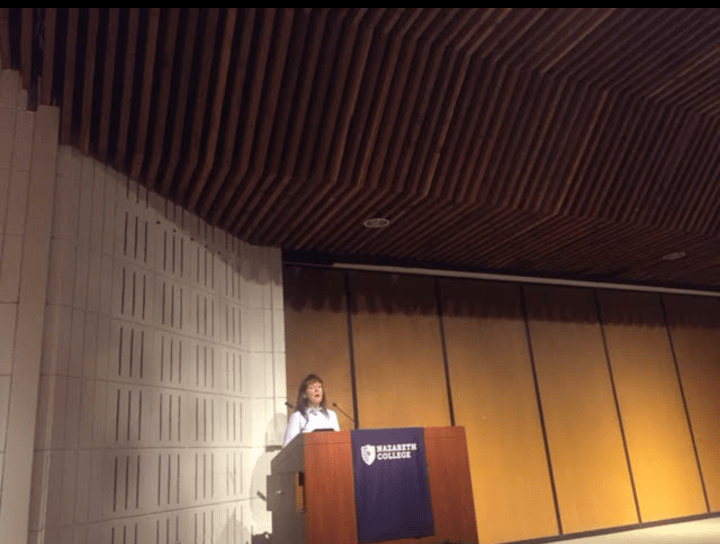
You just never know what you’re walking into when you visit a campus for the first time. Nazareth’s Health Center brought me in for an evening presentation in support of DV Awareness Month. The podium was unlike any I’d used before (short!) and I couldn’t see my notes, even with my readers on. I tried to remedy the situation by kicking off my heels about ten minutes in but as it turned out, shorter wasn’t better. So… I ended up delivering the entire presentation sans shoes, notes and readers 🙂

20161130_191059

Because it was a campus-wide event, there were faculty and students from many different disciplines in attendance. Such great questions for me and interesting discussion afterward! I also loved that I was able to spend extra time with students who wanted to speak with me one-on-one long after the scheduled presentation time had come and gone.

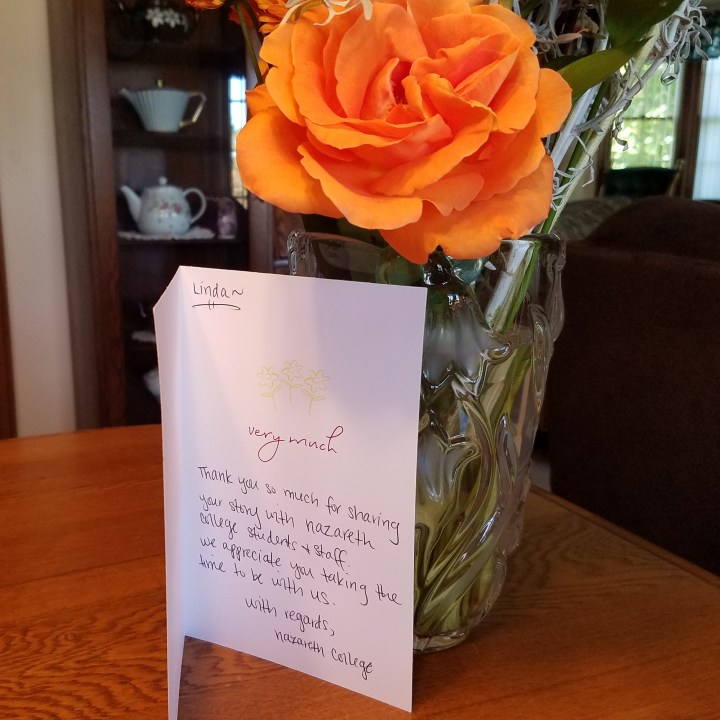
img_20161015_113245

Presented to me by the Health Center interns: “Thank you so much for sharing your story with Nazareth College students and staff. We appreciate you taking the time to be with us.”

20161026_172725

Two day event in the Finger Lakes region for Hobart and William Smith Colleges.

20161025_185641

The room filled up with students and professors pretty quickly (past and present – some even brought their parents!) but there were folks from the community in attendance, as well.

20161026_184236

Talking about Emily Carson, a young mother of three who was murdered in downtown Geneva in February of 2016. She was shot twice by her boyfriend before he turned the gun on himself. It all happened one quiet Sunday morning while dozens of innocent bystanders became unintentional witnesses. His family was quoted afterward as saying that he “…wasn’t a violent guy.” I talk about how quickly an emotionally abusive relationship can turn violent, especially once a victim leaves or tries to leave.


20161026_184011

And this is how we do it – taking questions from Dr. Jim Sutton’s undergraduate Social Deviance class, Hobart & William Smith Colleges.

img_20161026_190659

Book signing 🙂 By the end of the class, many of the students are comfortable enough to share their own stories with me. Honestly, this is my favorite part of any presentation – meeting the students one-on-one!

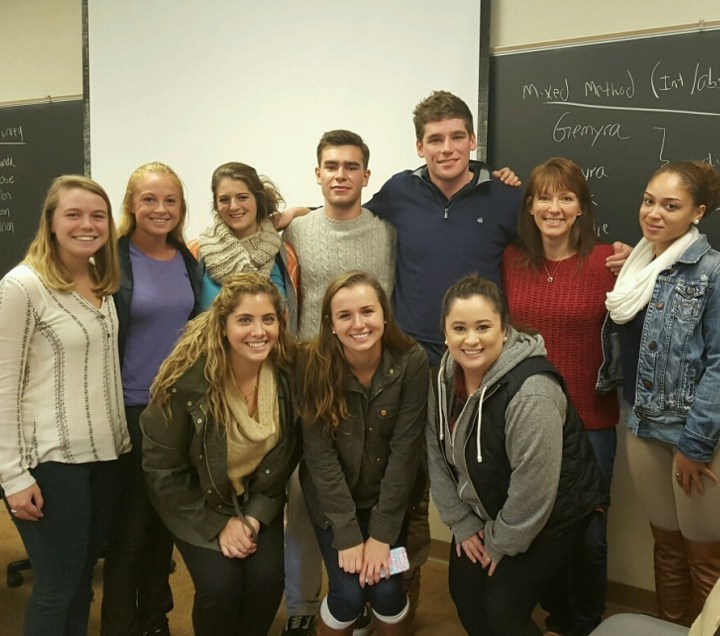
img_20161026_191006

I wish my own children were as enthusiastic about having their picture taken with me as my students are! About half of the class is pictured here.

img_20161109_224736

I always take a very relaxed approach to presentations because the material can get extremely graphic and emotional. Reactions run the gamut; there are students who spend the entire class period furiously scribbling notes while others will cringe, get visibly agitated or need to leave the room to compose themselves. There are always survivors of violence in the room – always – and Dr. Noelle St. Vil’s Social Work class at the University at Buffalo was no different.

20161108_092610_14787361740951

It was very early on in this “public speaking” thing that I realized that I was going to need to sprinkle in a little levity here and there. When I smile, the students smile. When I poke fun, they laugh. It’s an essential element to making sure that the students can “hear” me. Yes, I tell them, what I lived through is terrible and no, it wasn’t fair and yes, I bear the scars of it – but – my life continues to move on and here are some of the dozens of silly, crazy, ridiculous stopping blocks I’ve had to overcome in the years since I left.

20161108_103547_14787363121271

Many graduate students are already working in the field; staffing shelters, working at local help centers or with law enforcement. Their timely, real-world anecdotes are helpful in generating discussion that goes beyond my experience and what they’ve learned about in class.

img_20161129_213203

I’d never Skyped a class before, so I was more that a little concerned that I wouldn’t be able to gain the emotional momentum needed to connect with the students. Happily, within minutes I realized that it wasn’t going to be an impediment; the students in Dr. Angie Moe’s SOC 4950 Family Violence Class at Western Michigan University made the best of the unusual set-up and filled the hour with really thoughtful, specific questions.

Presentation Reviews

Standard

20161228_090617“I have been talking to my class as well as to folks who attended your evening presentation.  Everyone has shared thoughts that contained words like ‘amazing’, ‘incredible’ and ‘powerful’.  It is clear to me that your visit made an important contribution to their learning.” – Dr. James Sutton, Professor of Sociology, Hobart & William Smith Colleges

“I really appreciated how you were able to talk about such difficult material in an honest and down-to-earth manner. The Skype session with you was clearly the stand-out class period of the semester. It’s certainly not every day that college students can speak directly to the author of one of their reading assignments! You both reinforced and enhanced our collective understanding of the dynamics involved with intimate partner violence. We admire and respect you greatly.” – Dr. Angie Moe, Professor of Sociology, Western Michigan University

“I assigned ‘Leaving Dorian’ to my graduate level Domestic Violence course. From the very start, my students were enthralled and invested in her story. This was not only apparent in our class discussions, but also when Linda visited my class as a guest speaker; the three-hour time frame for the one-day per week course seemed to pass within minutes rather than hours, as we sat in a circle informally discussing her book. Linda’s visit was invaluable, not only to my students, but also to me. So much of what Linda shared in her visit with students aligned with my course material. Linda’s name frequently arose in classes after her visit, as many of the students (as well as myself) referenced Linda in subsequent classes. The ability to use examples from Linda’s book and her class visit was incredibly beneficial when teaching challenging concepts and driving home important points. Also, I find it important to note that at the end of the semester, when I asked for informal feedback on the course, every one of my students mentioned that Linda’s book and her visit were “absolute musts” for my future classes. Without a doubt, I firmly believe Linda positively impacted my students’ understanding of domestic violence, and cannot wait to have her visit Niagara University in future semesters!” – Dr. Dana Radatz, Professor of Criminology, Niagara University

From Student Evaluations Administered After Presentations:

The one thing I found most helpful about this presentation was:  “The openness of the conversation. We were allowed to ask whatever questions we were wondering.” – “How honest and understanding she was.” – “The statistics she gave were eye-opening and I really loved that she gave out packets of data, as well. She made her story so open and honest to us; it made it so real and incredibly motivating.” – “It was more of a discussion and not a strict lecture. She was very personable, funny and friendly.” – “The open discussion format. I liked the different directions that the presentation went in due to our ability to ask questions continuously.”  – “Her candor and honesty about a very difficult topic.” – “How open and honest she encouraged us to be.”

Other comments: “I love your style of presentation. Amazing experience!”  – “I really enjoyed your presentation and conversation we had!” – “I think your current role in the world is very important. Everyone needs to hear your story and other stories like it so we may be one step closer to implementing change.” – “I am so very thankful for Linda Dynel and strong individuals like herself who so bravely share their stories to educate and help complete strangers. It is because of people like her that brings bursts of light to those who feel they are alone in the dark.” – “Emotional and wonderful experience. Painful but cathartic.” – “So awesome! This book should be required by all colleges for their students to read!” – “This was an amazing presentation and I felt like it improved me as a person and as a social worker.” 

“Think About It” Thursdays

Standard

20161113_070014“During the 19th century, some legal actions were taken to address the most extreme forms of battering. However, since battering was socially and legally acceptable, most of these new laws were simply intended to regulate the level of violence used and the severity of injury allowed. Examples of such laws ranged from the common law rule of thumb to more modern certain rule and stitch rule. The certain rule of the mid-1800s indicated that no outside interference would occur in wife battering unless the husband created a permanent injury to the wife. The stitch rule of the early 1900s cautioned men not to cause injuries requiring stitches because police could be called to intercede in such situations….laws concerning battering developed from a foundation of acceptability and regulation rather than one of social disapproval and criminalization.”

*Excerpted from Self-Defense and Battered Women Who Kill: A New Framework , Ogle/Jacobs, (2002)